We talk a lot about AI in construction, but most of it still lives behind a screen. Robotics is different in that it’s highly physical and can literally shape what happens on the jobsite.
If we really think about it, robotics is where AI stops living on a screen and starts showing up in the real world. That shift—from digital to physical—is what makes this moment so interesting.
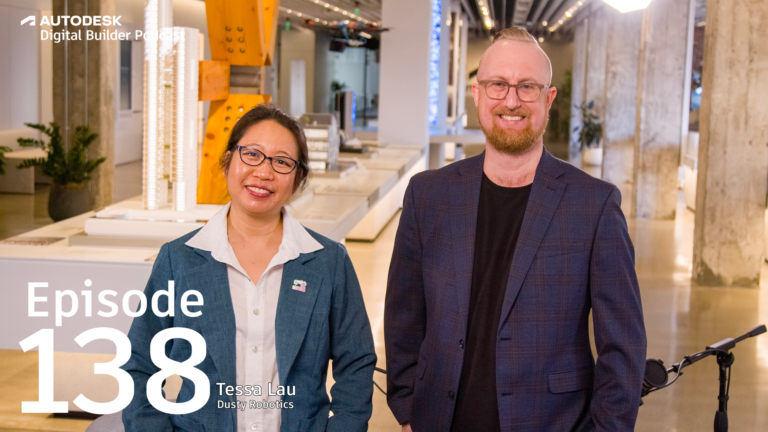
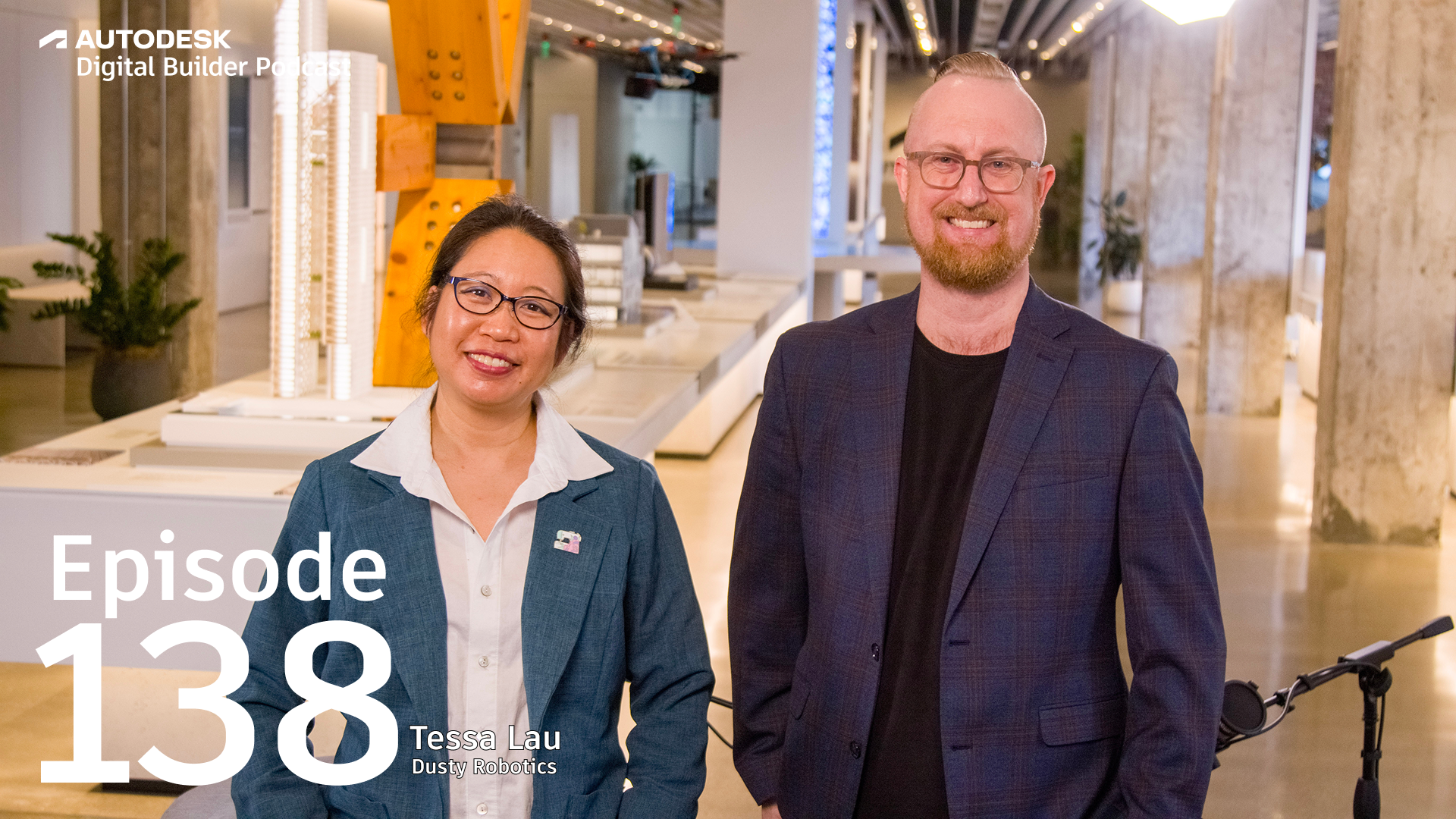
In this episode, I sit down with Tessa Lau, CEO of Dusty Robotics, to explore how robotics is reshaping construction from the ground up. From bridging the gap between digital plans and field execution to unlocking entirely new workflows, this conversation gets into the practical use cases of robots on the job site.
We discuss:
For Tessa, Dusty Robotics wasn’t a random idea. It was the culmination of everything she’d been building toward for years. “I call it physical AI,” she says. “It blends together all the things I’ve ever done. Dusty is the pinnacle of everything I’ve done in my career.”
Her path started with a PhD in AI, long before generative AI entered the mainstream, followed by work at IBM on business process automation. But something was missing. “Software AI is great at automating things that live behind a screen, but I really wanted to touch the world. Robots can move atoms, not bits.”
After co-founding an earlier robotics company, Tessa took the lessons she learned from that venture and started fresh, with Dusty.
What pulled her into construction specifically was the people. “One of the things I love about the construction industry is the pride builders take,” she says. “We’d be driving down the road, and they’d point at buildings saying, ‘I built that.’”
“They’re creating a lasting impression on the world. That’s what I want to do too.”
Dusty Robotics’ mission is to bring alignment to the field. “We are creating a single shared truth for everyone on the construction site,” remarks Tessa.
She’s keenly aware of the problems that construction pros face on site: you start with a plan, but once work begins, things shift.
“As soon as you start building, your plan is obsolete,” she explains. Changes come in, site conditions differ, and the plan keeps evolving. Meanwhile, the people doing the work don’t always have the latest version.
Tessa points out that only 11% of field teams have access to all the information they need to build. It’s a terrible statistic, and it shows up in real ways: misalignment, rework, and delays.
Dusty bridges that gap by connecting the digital and physical. Starting with the model, the system ensures everyone on site can see it, access it, and build exactly what’s intended.
Dusty isn’t just automating layout. It’s changing how work gets sequenced, coordinated, and executed. As Tessa puts it, “it’s not about the robot, it’s about what the robot enables.”
From manual layout to digital precision
Most job site layouts haven’t changed in thousands of years. “Chalk lines and string… that was invented by the early Egyptians 5,000 years ago,” Tessa says.
Dusty flips that. Instead of manual layout, the robot prints directly from digital drawings onto the floor with perfect accuracy and up to 10x the speed. That creates immediate alignment between plan and execution.
Now, crews aren’t interpreting drawings. They’re building exactly what’s been printed. The plan and the work start to sync around that “shared truth.”
Multi-trade coordination, earlier in the process
Instead of each trade working in isolation, teams can bring all designs together in one place.
That means conflicts show up sooner. “Trades can find conflicts and do field coordination a lot sooner than they would otherwise,” Tessa explains.
On site, teams can walk the floor together, see overlaps at scale, and fix issues before anything is built. “We’re shifting that work upstream,” she says. In many cases, coordination happens before crews even step onto the jobsite.
Reordering work to unlock productivity
One of the biggest changes happens in how work gets sequenced.
In one project, Dusty enabled a contractor to rethink mobilization entirely. Instead of trades coming in, laying out, leaving, and coming back later, everything was printed upfront. That created a clean, open floor for the next crew.
The result? “That mechanical crew doubled their productivity,” Tessa says. They didn’t have to work around partially built elements, and the project saved millions in labor costs.
Again, it wasn’t just the robot. It was the workflow change.
Parallelizing construction
Dusty also removes dependencies that typically slow projects down.
Take equipment installs. Traditionally, crews wait for critical components, like an air handler, before building around them. But with a precise layout, that constraint disappears.
“You can install all the ductwork first,” she explains. “Then when the air handler shows up, you drop it in, and it fits.”
That allows teams to parallelize work instead of waiting on long-lead items.
Bringing plans to life for stakeholders
It’s not just crews who benefit. Owners do, too.
Some teams use Dusty to print entire layouts for custom homes. “You can walk your slab before anything’s been built,” Tessa says. Kitchens, bedrooms, hallways, all mapped out in real space.
Construction is a risk management business. Every decision, from planning to execution, comes down to minimizing uncertainty and avoiding costly mistakes.
At first, layout was seen as a subcontractor problem. “General contractors wanted to divest themselves of that risk and place it on the subs,” Tessa explains. But robotics changes that dynamic.
“When you have a robot doing the layout, you’re actually moving risk around. You’re reducing your risk.” Subcontractors were the first to see it. Fewer layout errors meant fewer cases where “their plan would diverge from the reality they were building.”
Then GCs caught on. Instead of reacting to issues late in the project, they started using Dusty as a risk mitigation tool. Because one of the biggest risks isn’t a single mistake. It’s coordination.
“Each trade does their own thing in a silo,” Tessa says. And you often don’t catch conflicts until you’re “80% done with your building.”
Dusty helps teams surface those issues earlier by bringing trade data together and aligning everyone around the same plan. In effect, teams can simulate the build before it happens and avoid costly surprises later.
Hesitation around robotics (or any new technology for that matter) isn’t surprising.
Construction is a high-stakes industry, and “it’s all about risk,” Tessa says. Teams stick with what works because “you’ve survived this long by doing things the way you know how to do them.” Trying something new can feel like a gamble, especially when margins are tight.
That’s why she doesn’t push an all-in approach.
“We recommend a crawl, walk, run philosophy,” Tessa explains. Start small. That could mean using a robot for just one trade’s layout. Learn how it works. Build trust in the process. From there, teams expand. More trades come on board.
“Before you know it, you’re a Dusty expert.”
Digital Builder is hosted by me, Eric Thomas. Remember, new episodes of Digital Builder go live every week. Listen to the Digital Builder Podcast on:
or wherever you listen to podcasts.