A lot of the time, decarbonization is discussed in abstract terms, like “net zero targets” or “long-term climate commitments.”
These are all incredibly important. But when decarbonization is framed this way, it’s hard to take action because the work feels distant and disconnected from day-to-day decisions.
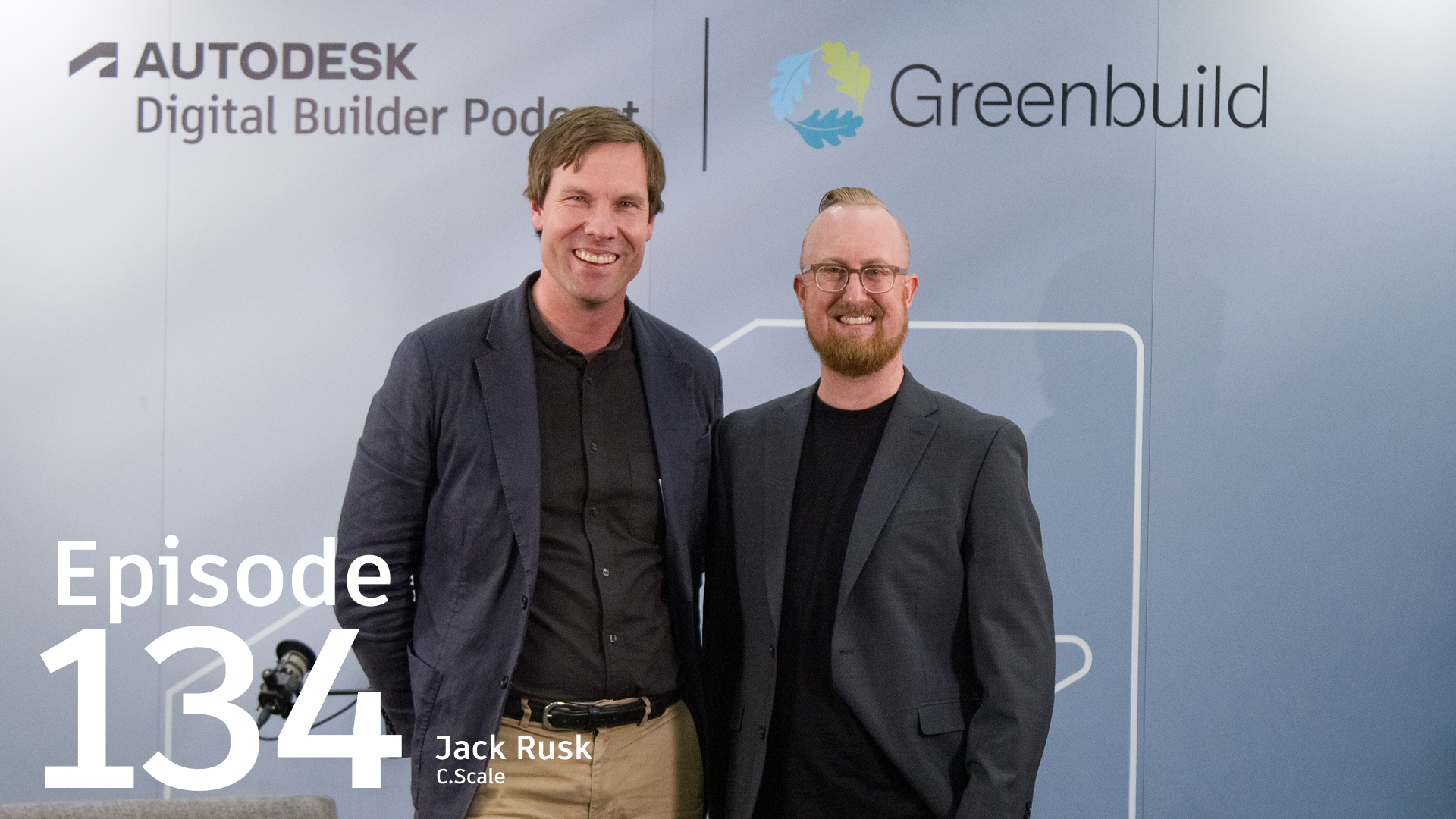
If we want to build more sustainably, we need to demystify decarbonization and tie it back to the real choices teams make every day. Here to help us do that is Jack Rusk, Co-founder of C.Scale, a platform that helps architects and builders make data-driven design decisions to reduce project costs and carbon emissions.
Jack breaks down the notion of decarbonization in practical terms and shows what it means for the built environment.
We discuss:
Jack starts off by stating that decarbonization can mean different things across industries. Sectors like agriculture and transportation view decarbonization through their own lenses and priorities.
In the AEC industry, decarbonization centers on how buildings move energy, materials, and labor through a global system. “Every building is like this node in a global network,” Jack explains.
When teams design and construct buildings using cleaner materials and cleaner energy, they can influence change well beyond the jobsite. That is really the core of decarbonization in AEC.
This shows up in a few practical ways.
Building with less
The first and most essential step is simple in theory and hard in practice: use less. That often means adaptive reuse. Instead of starting from scratch, teams find ways to make better use of what already exists. This lowers material demand and avoids unnecessary emissions tied to new construction.
Preservation of cultural stories
Adaptive reuse is not just a climate strategy. It is also a preservation of cultural stories. “We aren’t just decarbonizing buildings because we care about climate change,” Jack says. “We also care about culture and people.” Reworking existing spaces can create better experiences and living environments without erasing history.
Looking upstream (the supply chain)
Decarbonization also requires looking upstream. Buildings rely on hundreds of materials, all sourced, manufactured, and transported to different places.
“All those materials come from somewhere. When we get serious about where they come from and how they're produced, we can take these positive impacts we have on the building site. And then we multiply those positive benefits upstream where the materials are manufactured.”
All together, decarbonization becomes a lens that connects healthier buildings to healthier systems overall.
Decarbonization starts long before a project makes it to the job site. In fact, it can happen in ways that feel abstract or even theoretical, especially when tackled in the design stage.
As Jack puts it, designers work at “various degrees of abstraction.”
“Maybe they'll plan a whole neighborhood or district, and they're planning it just with rectangles drawn on a map.”
It doesn’t feel concrete, but within a few years or so, those shapes will turn into real buildings made of real materials.
“An architect will draw a wall section, and the way that wall section is drawn determines the labor that puts it together and the material supply chains that are mobilized to make it work,” Jack says. Gypsum comes from somewhere. Wood comes from trees. Steel comes from either primary materials or recycled ones. Small decisions stack up.
This is why embedding carbon thinking into design matters. It helps teams understand how early choices can have a significant carbon impact.
Jack says it best: "Designing with intention really is the name of the game."
Decarbonization isn't without its challenges. One big hurdle, says Jack, is a lack of data. And there’s the fact that teams are expected to reduce carbon while still delivering on cost, schedule, and design outcomes.
Traditional workflows also pose a challenge.
Jack notes that “legacy processes for doing carbon assessment require the project to be complete.”
And while there’s definitely something to be said about looking back at your decisions, that approach leaves very little room to change the outcome.
“Ultimately, we want to focus on moving decisions earlier in the design process and allowing people to make tactical, directionally accurate decisions early in the game.”
When it comes to tracking a project or a building's carbon emissions, Jack points to two factors: the building materials and the sources of those materials.
“Lifecycle assessment requires comprehensive tracking of materials and processes. That's always the first layer—it’s just tracking what goes into the building. And then the second question is, well, where did that stuff come from?”
“This starts to give you a couple of different levers to play with in reducing the environmental impact of a building,” he adds.
Those levers include using fewer materials and then using better materials.
From there, teams can start connecting design intent to real supply chain data. The first pass at quantity surveying typically happens inside digital design tools like Revit. Once those quantities are known, environmental product declarations help fill in the gaps. As Jack explains, these declarations “take a lot of the complexity of supply chain impacts and roll it into simple documents that you can reference.”
This helps teams make more sustainable decisions. For example, if steel from one manufacturer carries a certain carbon impact, teams can explore alternatives. Could the structure be designed to use less steel? Would sourcing steel from another manufacturer help?
Whatever the case, having clear data early allows teams to ask better questions and make informed tradeoffs before decisions are locked in.
AI is starting to influence decarbonization in very practical ways, especially in how teams design and make decisions earlier in the process. Jack sees its impact in two key places: at the bottom of the AEC tech stack and at the top.
Those that leverage AI at the bottom of the tech stack are all about using things like statistical models and machine learning to make more sustainable decisions at the design stage.
Over at the top, Jack says the focus is on changing how people interact with carbon data and models in their day-to-day workflows.
“We have our classic SaaS product. We just released to a beta group, an MCP that allows people to interact with our carbon models through a chat interface embedded in whatever their sort of LLM of choice.”
Concerns about AI and sustainability
There are, of course, valid concerns about AI’s environmental footprint. Jack acknowledges these things and frames them in terms of leverage.
“Let’s say the impact of AI and data centers is a little less than 1% of global emissions, and the built environment is closer to 40%. If we can achieve massive reductions in built environment emissions, leveraging data center emissions, I think we have the potential to do a lot of good in the world.”
In other words, if AI helps drive meaningful reductions in the built environment, the net positive impact can be significant.
For teams trying to figure out where to begin, Jack’s advice is to start with data.
“Start doing some analysis. We work with Autodesk Forma, and it’s great if you're in the larger Autodesk Construction Cloud, as you have access to those tools.”
Beyond that, he emphasizes the importance of learning and engaging with industry peers.
“Join communities of practice. So much of the knowledge that lives in the construction industry lives in people.”
Digital Builder is hosted by me, Eric Thomas. Remember, new episodes of Digital Builder go live every week. Listen to the Digital Builder Podcast on:
or wherever you listen to podcasts.