Autodesk Construction Cloud is now part of Autodesk Forma. Product names have been updated, though some resources may still reflect previous branding. Learn more.
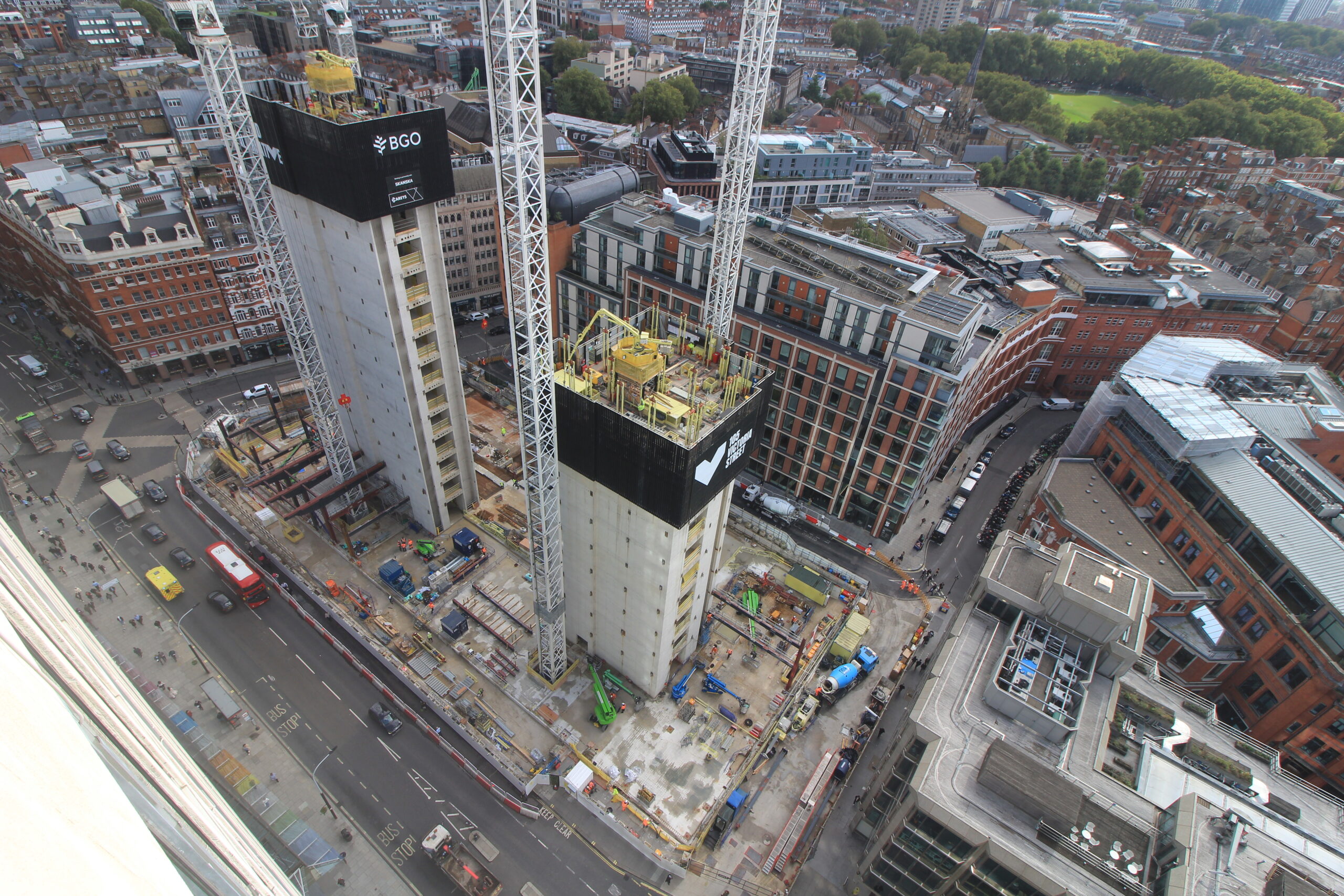
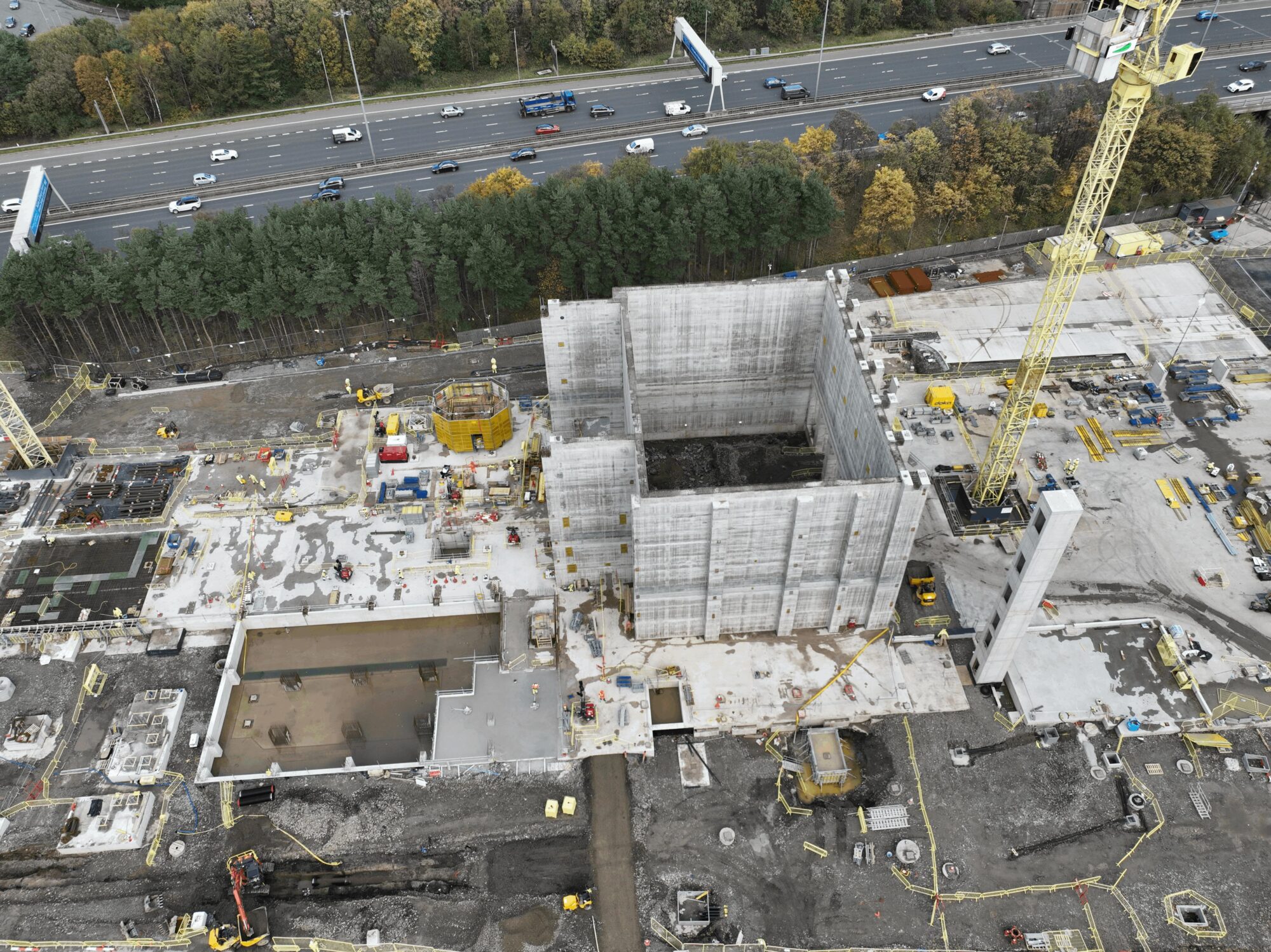
With a reputation for providing high-quality, complex concrete structures and civil engineering, Careys is one of the largest private, family-owned companies in the UK.
Driven by its strategic goals, Careys has spent the past two years on a mission to build on its success by improving how it works. In March 2023, the senior management team set itself an ambitious task: designing the ideal process for managing every project.
Realising this would mean digitalising the business, it saw measurement as an ideal starting point. If teams could measure once, share this data and highlight any changes all in one system, they would provide clarity, feedback and consistency – all while eliminating waste and turning Careys into a leaner, more effective and efficient operation.
By going digital, Careys’ ambition was to be the most forward-thinking and efficient contractor clients could work with. Autodesk has played a significant role in achieving this.
As a specialist contractor, Careys relied on the common data environments (CDEs) of its main-contractor counterparts. But different CDEs on different projects meant Careys’ own data wasn’t standardised or always easy to find. The business saw it could gain large efficiencies by reducing time spent on paperwork. With better-connected processes, it could spend less time on remeasurement as well.
Careys was keen to invest heavily in digital transformation to improve the experience for its customers and its people. To streamline effectively, Careys undertook a strategic review of its business operations and processes.
Derek O’Neil, director of planning and project controls at Careys, along with Chris Read, head of business change, then worked with senior leadership to whiteboard a target operating model (TOM) – a clear vision of the business’ future.
This TOM followed the lifecycle of a single construction component. “Through our TOM, we approached digital transformation as an opportunity to simplify our processes and tools, eliminating the waste that many companies take as a given on construction projects. Measurement, and remeasurement, lie at the centre of that waste,” said Derek.
The resulting model, with joined-up processes rooted in a CDE, was an instant win. Derek recalls: “Sharing the TOM, we saw light bulbs going off all over the room as people saw how streamlined our work could be.”
In the tender process for its CDE, Careys invited key team members from every department and region to score potential vendors on a shared decision-making matrix. So, when Autodesk Construction Cloud came out as the top scorer, it was a joint decision.
“Autodesk was an easy sell,” says Chris. “Careys was a paper-heavy business, so people had been talking for ages about digitising our forms and working more seamlessly. Autodesk Construction Cloud offers seamless integration in one platform, and it gets tighter with every release.”
Even with widespread buy-in, rolling out Autodesk among site teams meant a massive change to how everyone worked. For people to embrace it, the process had to be about making life easier for them.
Derek and Chris set up a network of Autodesk champions, who decided to begin the transition with document management.
Calling together a group of health and safety, quality, sustainability and project delivery teams, they agreed a folder structure and streamlined 320 existing forms into 70 digital forms, and added them to Autodesk Construction Cloud. The champions then trained their teams, using a shared approach.
Contracts manager Sean Marks says, “Our teams had been using paper systems and a web-based platform for the last 10 to 15 years and we were swapping them over to something fundamentally different. Doing the rollout in such a careful, controlled way, with the right champions in place, has been a massive part of our success.”
With Autodesk Construction Cloud newly rolled out across all Careys projects, the company is already saving time and money, while improving quality and safety.
Derek explains, “We’ve raised 22,500 forms in the past 14 months, and in general we’re saving about 20 minutes a form. That’s 7,500 hours we’ve saved, and that’s just a start. People are using that time to improve quality and safety – we’re seeing fewer non-conformance reports (NCRs) and fewer safety issues.”
When Careys has an NCR, it can raise it via an issue into its business intelligence (BI) report. Sean says, “We can track real-time NCRs and their real business costs, which we've not done very well in the past. This new transparency in our spending has been a key benefit.”
Sean has also seen improved efficiency on site. “It’s unquestionable. And people have more headspace to consider and plan their work, meaning they keep on top of things, and avoid extra costs and complications.”
For Sean, the biggest improvement to life onsite has been the ability to link issues to assets by simply using a QR code. “We used to have paper copies for doing inspections. Now it’s all digital and we have a cleared log. It’s working incredibly well.”
With real-time QA, Careys is seeing more efficiency and fewer errors. “The team are doing it as they go, using the app on their mobiles. For a project site team, this system does everything we’ve been looking for, for many years.”
Careys has invited a major client to join it on Autodesk Construction Cloud (ACC) for a key project. This access allows the client to raise issues – such as variations, observations, and NCRs – in real time.
Back at the office, Careys’ commercial team can download these issues instantly, enabling them to promptly identify variations and begin pricing changes. “As the commercial team became confident in its use, they became increasingly enthusiastic about Autodesk Construction Cloud,” says Sean.
“What we’re building into the business is transparency and traceability at all levels,” says Derek. “We can tag people in issues, so we’ve created accountability in every workflow. That’s a fundamental shift for us, and I can’t overstate its importance.”
Chris adds, “People know what they’re employed for and want to take responsibility for it – and working in Autodesk Construction Cloud, they have the tools they need to take on that responsibility.”
Rather than bringing notes back to the office (and trying to remember what they mean), supervisors can walk around a site, taking photos of snags or issues and allocating them to people who can immediately put things right. “People are taking pride in sorting things out as they go. Project managers no longer have to ask to get things done,” says Derek.
Sean explains, “Without a long snag list at the end of a project, we save money. It’s cheaper because we have workers on site fixing issues as they arise. It’s working incredibly well for us.”
Previously, after safety advisors toured a site, Careys teams would receive their reports as emailed PDFs. When advisors returned weeks later, there could still be outstanding issues. Now, audits happen within Autodesk Construction Cloud, where photos can be uploaded and issues raised to individuals. With more accountability, issues are closed quickly. “It’s 100% improving safety efficiency on site,” says Sean.
Derek adds, “The photos play a role, but it’s also because every asset, like scaffolds or plant and equipment, has a QR code sticker on it now. We can scan the codes to check the inspections have been done correctly.”
By scanning an asset’s QR code, Careys team members can bring up its data sheet from Autodesk Docs, and then link a person and a briefing sheet to it – along with a risk assessment and method statement. Using Autodesk Data Connector for Power BI, they can see inspections that are upcoming or overdue, and make sure they’re ready for them.
Careys can invite its clients into Autodesk Construction Cloud, giving them visibility into processes and systems to support their own upstream reporting, or for use as the collective project CDE. They can walk around on site and scan QR codes, and see that things are being done properly.
“They get more transparency around our processes, and we’re more than happy to let them see that,” says Derek. “We can also raise variations and change events easily, and notify clients quickly.”
Careys can also create made-to-order automated reports for clients, for example, sending a report of all inspections every week. “You’ve got that traceability, and once you’ve set up the reports, you don’t have to think about them anymore,” says Chris.
By streamlining project reporting and resource management with Autodesk Construction Cloud, Careys has become greener.Dan Evans, head of sustainability, explains, “Autodesk has enabled us to digitise and bring consistency to our sustainability processes, such as inspections and forms. It allows us to capture information and analyse performance trends, helping us set more informed KPIs.”
Careys now has complete traceability around every piece of waste that leaves its sites, and has a waste dashboard giving statistics at project and company level.
The company is also integrating bespoke carbon factors into Autodesk Takeoff, letting its estimators view take-offs in terms of quantities, carbon and costs. This ensures Careys embeds carbon considerations as early as possible in projects.
Moving from paper to digital has brought a massive reduction in printing. Chris describes seeing empty rows of shelving where once lever arch files were held, and says that instead of huge photocopiers, Careys only needs a small printer on site.
Careys’ partnership with Autodesk has improved day-to-day work, saved time and money, and offered its clients much more transparency. It also sets a new standard for its future partnerships.
“The way we’ve approached this rollout with Autodesk has been the same way we’d approach any construction project with our clients. Careys pride themselves on detailed planning and the execution of our works to the highest levels of quality and safety,” says Derek.
“We want to offer transparency and be able to resolve issues quickly and simply. And we want to deliver our TOM through complete collaboration with our clients – all on the same page, working in one common data environment. Autodesk is the right tool for the job, without question.”