Farm-to-table transformed the way we think about what's on our plates. But what if we applied that same philosophy to the places we live? That's the idea behind BLDUS' "farm-to-shelter" approach, which reimagines housing through locally sourced, healthier, and more sustainable building materials.
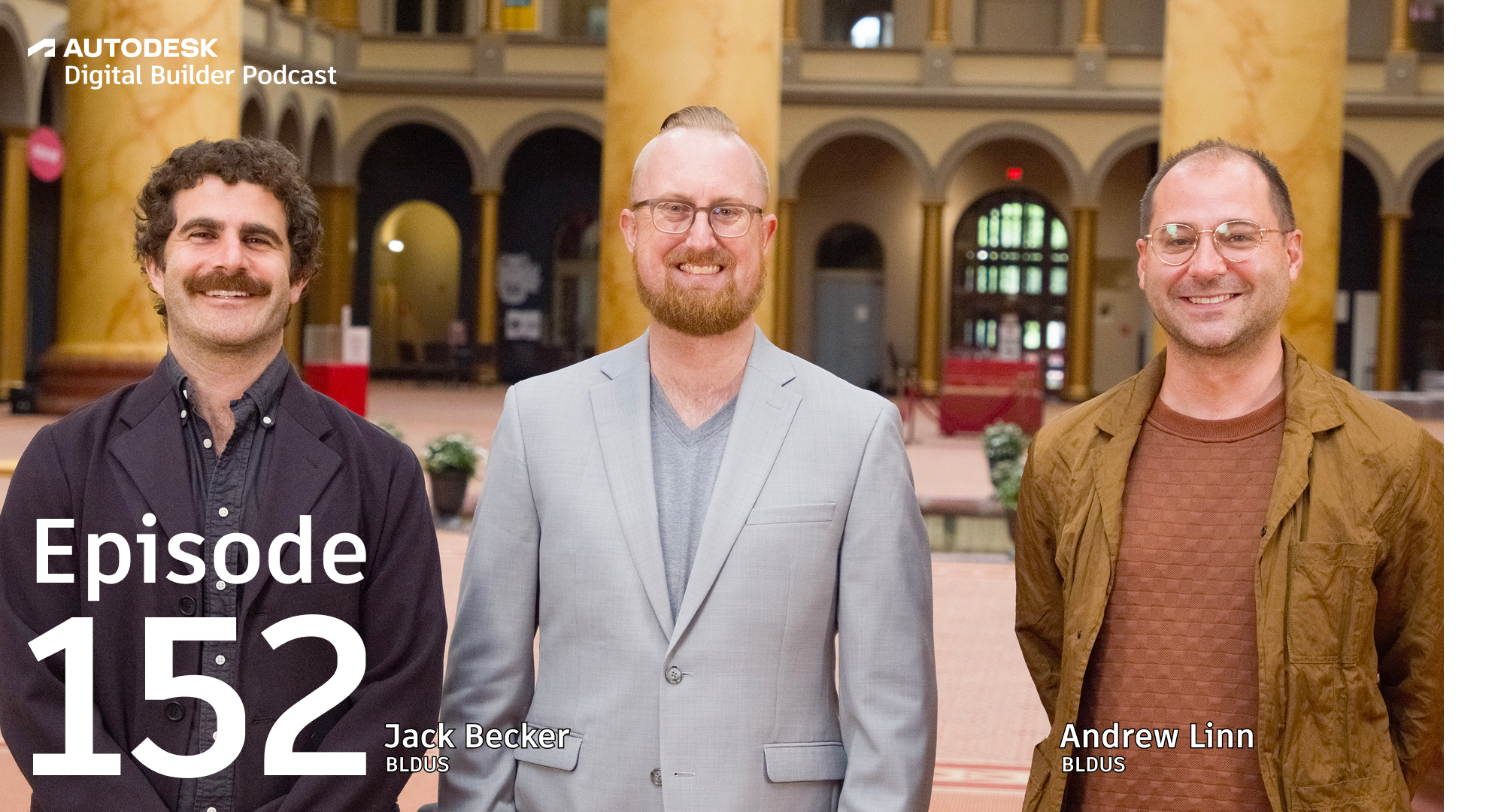
In this episode of Digital Builder, Jack Becker and Andrew Linn, principals and co-founders at BLDUS, discuss why material choices matter, how architecture can support healthier communities, and what it takes to rethink housing from the ground up.
We discuss:
When Jack and Andrew look at housing today, they see opportunities to rethink one of the industry's biggest blind spots: building materials.
"Most of the building materials that are used commonly today are remnants of the military industrial complex," says Andrew. Things like drywall, paint, and fiberglass insulation became widespread after World War II, yet many people rarely think about how they affect indoor environments.
He compares the issue to fast food. When people consume it, they know that they’re making certain tradeoffs around their health.
"Buildings are a little sneakier," Andrew remarks. "Unless you're very aware of your surroundings, you don't know that the paint and the drywall and the wood furniture and all these other products that you surround yourself and your family with are off-gassing and causing very minor but very consistent negative health impacts."
Instead of proposing expensive or impractical alternatives, BLDUS focuses on solutions that are readily available. "We try to look for alternatives that are maybe radical in their spirit but are still off the shelf and accessible to everyday people," Linn explains. For BLDUS, it’s about finding "one-to-one cost replacements" that deliver "major health upgrades" without putting them out of reach.
BLDUS clearly has a different philosophy when selecting building materials. Here’s a closer look at how the firm’s approach comes to life in a project.
Material selection starts with a conversation
At BLDUS, material selection isn't a decision that happens at the end of the design process. It shapes the project from the beginning.
Jack describes it as "a strong symbiosis between the development of a project and the materials that we have come to determine are appropriate or compelling for that project." Every project starts with a dialogue. Clients often arrive with inspiration boards and ideas about how they want their home to look and feel. At the same time, the team studies the site, its context, and the surrounding community.
"The work is ultimately a mediation of the two," Jack says. It's about balancing "what we think is best for the site and the immediate context" with what resonates with the client and how they see themselves living in the space.
Designing beyond the first owner
BLDUS also thinks beyond the people commissioning the project today.
When studying historic buildings, Jack points out that they've often "outworn their original client user three, four, five generations."
This influences how the firm approaches projects.
"We want to outlive the specific desires of the initial client, but not ignore them either," he says. The goal is to "both meet and transcend the expectations and desires of that client" by responding to the site, the surrounding community, and even local industries that can provide regional materials and skilled labor.
Why constraints lead to better design
Clients don't have to arrive with every detail figured out. In fact, Jack says the best projects often involve a healthy amount of collaboration and challenge.
"It's usually somewhere in between," he says. Some of the firm's strongest work comes from clients with "a very specific attitude about what they want or what they think they want." He compares it to "a grain of sand in an oyster shell," where a little friction sparks a stronger architectural response.
While having complete creative freedom can be liberating, BLDUS doesn't rely on a blank slate. "We excel in response to constraints," Jack says. "And there will always be constraints, to be clear." Those constraints become opportunities to create architecture that's both deeply personal and built to last.
For BLDUS, material sourcing doesn't always begin with a project. Sometimes it starts with a chance discovery. Andrew points out that Washington, D.C. (where BLDUS is headquartered), offers plenty of opportunities because "there are so many different materials that are flowing through the city." When something unique becomes available, the team doesn't wait for the perfect project. They find a way to preserve it for the future.
One example came from the National Air and Space Museum, where the team reclaimed discarded Tennessee pink marble after parts of the building were replaced. They later used the stone as pavers, and it "set a color tone for the space that then infused itself into the rest of the building."
The same thinking extends beyond reclaimed stone. When building on vacant lots around Washington, D.C., BLDUS has salvaged self-seeded mulberry trees growing in nearby alleys, seasoned the wood, and incorporated it back into projects on the same site. "The wood, although the tree is no longer standing, gets to find its way back onto the same site," Andrew explains.
He laughs that "sometimes it feels like my job is to move piles around from place to place while we try to hang on to them," but for BLDUS, giving materials a second life is almost always worth the effort.
For BLDUS, bio-based materials aren't just a sustainability play. They're also about long-term performance and responsibility.
Jack says the goal is simple: "We don't want to create a liability for future generations with the materials that we're sourcing." If a building eventually reaches the end of its life, the materials shouldn't "create an environmental catastrophe" when they're dismantled or discarded. It's a "do no harm" approach that considers the entire lifecycle of a building.
Jack is quick to point out that these materials aren't chosen solely for environmental reasons. They also perform. Cork, for example, provides continuous insulation, meets code requirements, and is rated for exterior exposure. "There's a match in performance, there isn't an increase in cost, and it's better for the environment.”
That doesn't mean these materials can be installed without careful design. "These materials are wonderful and beautiful and can be highly durable," Jack says, "but we also advocate for protecting them with architecture," using proven features like overhangs and eaves that help buildings stand the test of time.
Common misconceptions about the materials that BLDUS uses
Still on the topic of bio-based materials, one of the biggest misconceptions Andrew hears is that they're difficult to build with. On the contrary: "They're often easier to build with, and they're healthier to build with," he says.
In Andrew's experience, clients are usually on board. Homeowners appreciate the health benefits, while developers see opportunities for time savings and, in some cases, lower costs. The bigger hurdle is getting contractors comfortable with unfamiliar products.
"But at the end of the day, these materials are easy to work with. We've worked with them ourselves," Andrew says. Once builders become familiar with the products, "they're happy with the way that they function, with the way they're installed, and with the way they perform."
Clients are more informed than ever, and Jack sees that as both an opportunity and a challenge.
"Every project, every client relationship is different," he says. Today, clients often arrive with detailed research, visual references, and even AI-generated concepts. "Several clients have started using versions of AI visualization platforms that depict different scenarios for how a certain part of the building could materialize. That would've been kind of insane to encounter even a decade ago."
Rather than resist that shift, BLDUS embraces it.
"We welcome a higher level of involvement and curiosity and knowledge from our clients," Jack says. At the same time, architects still need to prove the value of their expertise. They have to "demonstrate why they're a key part of the project and should be steering the boat."
As Jack puts it, it's "kind of a blessing and a curse." But ultimately, "it keeps us on our toes."
Digital Builder is hosted by me, Eric Thomas. Remember, new episodes of Digital Builder go live every week. Listen to the Digital Builder Podcast on:
or wherever you listen to podcasts.