The topic of trust doesn’t always take center stage when we’re discussing AECO and technology, but if we really think about it, trust is critical in our industry. As the sector whose purpose is to shape the world we live in, every project depends on people having confidence in the tools, data, and partners they work with.
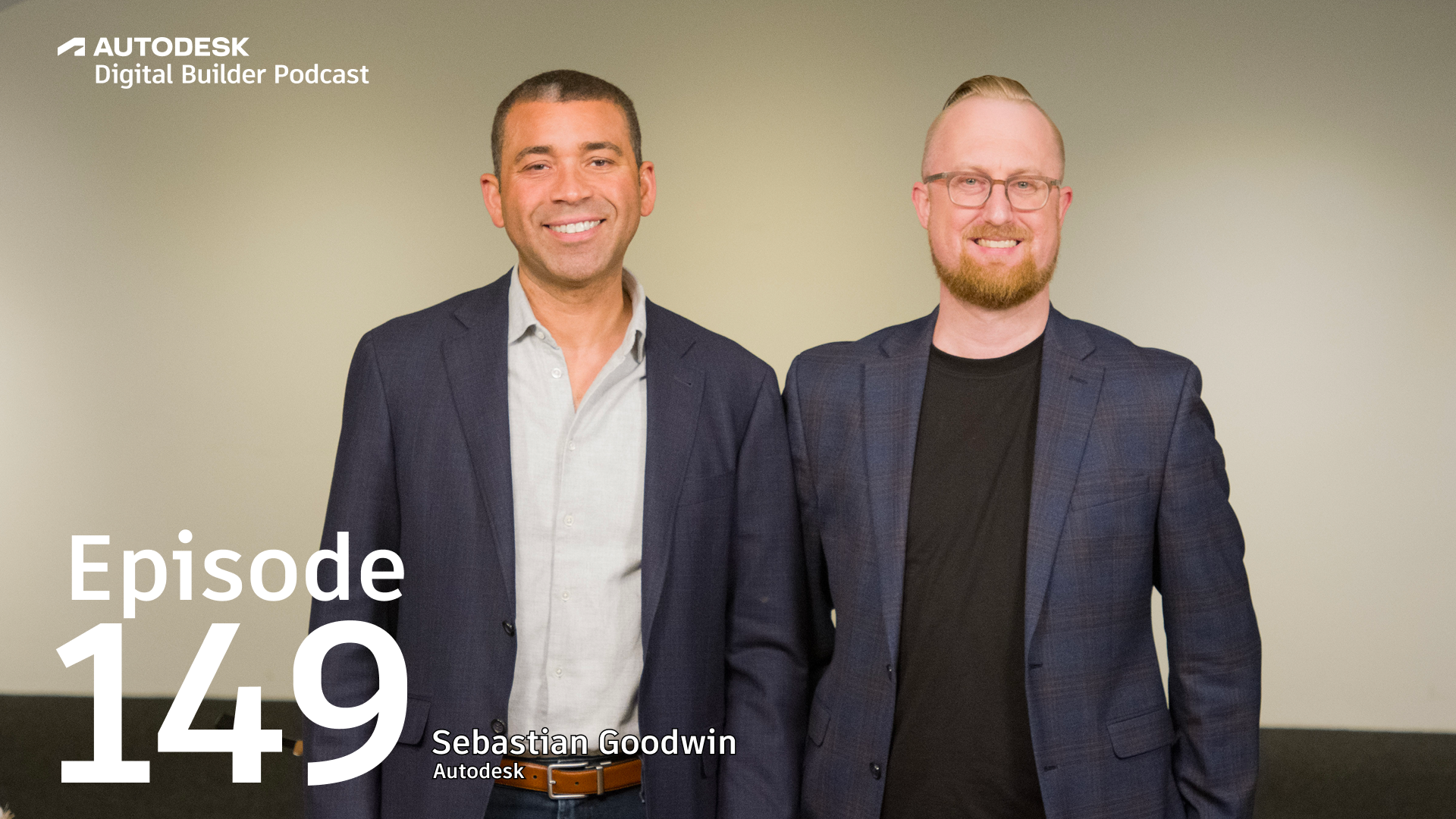
As Chief Trust Officer at Autodesk, Sebastian Goodwin spends every day helping customers and teams build that confidence. In this episode of Digital Builder, we explore the impact trust has in business, why transparency is becoming a competitive advantage, and how organizations can foster trust both inside their teams and with the customers they serve.
We discuss:
What exactly does it mean to be a Chief Trust Officer? According to Sebastian, the role is "the evolution of the Chief Security Officer or Chief Information Security Officer,” expanding the focus from protecting systems to earning and maintaining customer confidence.
While the Chief Trust Officer role overlaps with more traditional security leadership positions, it also extends into product development, customer communication, and governance.
“There's a lot more to it than security. We need to have great availability. We have to be very transparent with customers about how we use their data. We need to build things responsibly.”
Sebastian continues, “There are many, many elements. And I think that the security is a narrow view while the Chief Trust Officer role is the broader view.”
Ask Sebastian what a typical day looks like, and the answer is simple: there isn't one.
"One of the things I love about the role is that it can be completely different every day," he says. One day, he's meeting with EU policymakers in Brussels. The next, he's sitting down with customers to hear how they're using Autodesk products and understand their concerns.
Behind the scenes, he works closely with technical teams to make sure products are "built in a secure, safe, and reliable way."
But the role isn't only about technology. Sebastian also sees himself as someone who impacts culture across the business. "Every single person in our company has a role that they play in keeping the company secure and maintaining reliability and transparency for our customers."
It's a role that blends deep technical expertise with leadership. "I love learning the tech deeply," he says. "But I also view my job as very much influencing the behavior of people."
Trust isn't just a feel-good concept. It has a measurable impact on how teams work and how customers view an organization.
“It is so impactful within a company, to the culture, and how the company operates. Trust materially impacts performance and innovation,” remarks Sebastian.
He references research showing that organizations with strong internal trust don't just create healthier workplace cultures. They also benefit from higher performance and better customer experiences.
"Companies perform better. They treat customers better when they have trust inside. So internal trust is actually a prerequisite to getting customers to trust you.”
He also firmly believes that trust fuels innovation.
“Why can you innovate better when you trust? In companies where trust is low, people are less willing to take risks, as they have to protect themselves. In high-trust companies, people are willing to take risks in a safe environment. They have that emotional safety, but also well-governed risk.”
Going even deeper into the tangible aspects of trust, Sebastian points to an approach outlined in the book The Four Factors of Trust by Amelia Dunlop and Ashley Reichheld. He explains that trust can actually be measured using a scoring framework called TrustID, which evaluates organizations across four core areas: capability, reliability, transparency, and humanity.
Capability
Customers need to know they're working with a partner that can deliver. For Sebastian, capability goes beyond shipping features. It's about "providing all the features and capabilities the customers need" while also being "capable of securing their data."
In other words, expertise and execution matter just as much as innovation.
Reliability
Being capable means little if customers can't count on you. Sebastian explains that reliability includes the obvious things, like software uptime and cloud service availability. But it also extends to every customer interaction, whether that's support, customer success, or communication throughout the sales process. Trust grows when organizations consistently show up and follow through.
Transparency
Transparency is one of the clearest ways organizations build trust. Sebastian points to Autodesk's AI transparency cards as an example. Designed to answer common customer questions about how AI features work and how data is used, these cards are modeled after nutrition labels, so people can easily understand the information.
These cards have been extremely well-received. After customers viewed the transparency cards, they were 3.3 times more likely to try an AI feature.
“Whereas they had a little fear or hesitancy before, the AI transparency cards broke down that barrier.”
Of course, transparency extends to "so many other aspects of the business." The more open organizations are about how they build products, protect customer data, and make decisions, the easier it becomes to earn and maintain trust.
If you're looking to build trust, don't look for a single initiative or silver bullet. According to Sebastian, trust is built through the small decisions and interactions that happen every day.
"It's really in everything we do," he says. That includes the obvious things, like following security best practices and using company tools responsibly. But it also comes down to how people show up for one another and for customers.
As Sebastian puts it, "Trust is built up in little drops, but it's lost in buckets.”
Every conversation, every commitment you keep, and every interaction is another opportunity to strengthen trust. His advice is simple: be transparent, be reliable, and consistently show up as "that capable partner," whether you're working with colleagues across the organization or serving customers.
Trust isn't built when everything is going according to plan. According to Sebastian, it's tested when things go wrong.
"That's the moment when you really build trust," he says. "It's how you show up in that moment."
When facing a mistake, security incident, or unexpected challenge, his advice is to lead with integrity, transparency, and honesty. More importantly, keep your focus on the customer.
“You always start with the question, ‘What's in the customer's best interest?’” Sebastian explains.
That question becomes the north star for every decision that follows. Sometimes that means sharing difficult news. Other times, it means taking a measured approach so customers aren't put at greater risk.
Either way, he cautions against making decisions simply to protect your company's image. "You have to stay obsessively focused on the best outcome for the customer.”
While those conversations can be uncomfortable, "sometimes you just have to" tell customers something that's embarrassing or admit you don't have all the answers yet. The same principle applies beyond cybersecurity. Whether you're managing a construction project or leading a business, trust is earned by owning mistakes, communicating honestly, and showing up with integrity when it matters most.
Digital Builder is hosted by me, Eric Thomas. Remember, new episodes of Digital Builder go live every week. Listen to the Digital Builder Podcast on:
or wherever you listen to podcasts.