One of the things that makes preconstruction such a crucial phase in the project lifecycle is how many big decisions are made early, with multiple teams weighing in. It brings together skilled teams across design, estimating, and procurement. And for preconstruction to actually work, those teams need to stay aligned as decisions evolve.
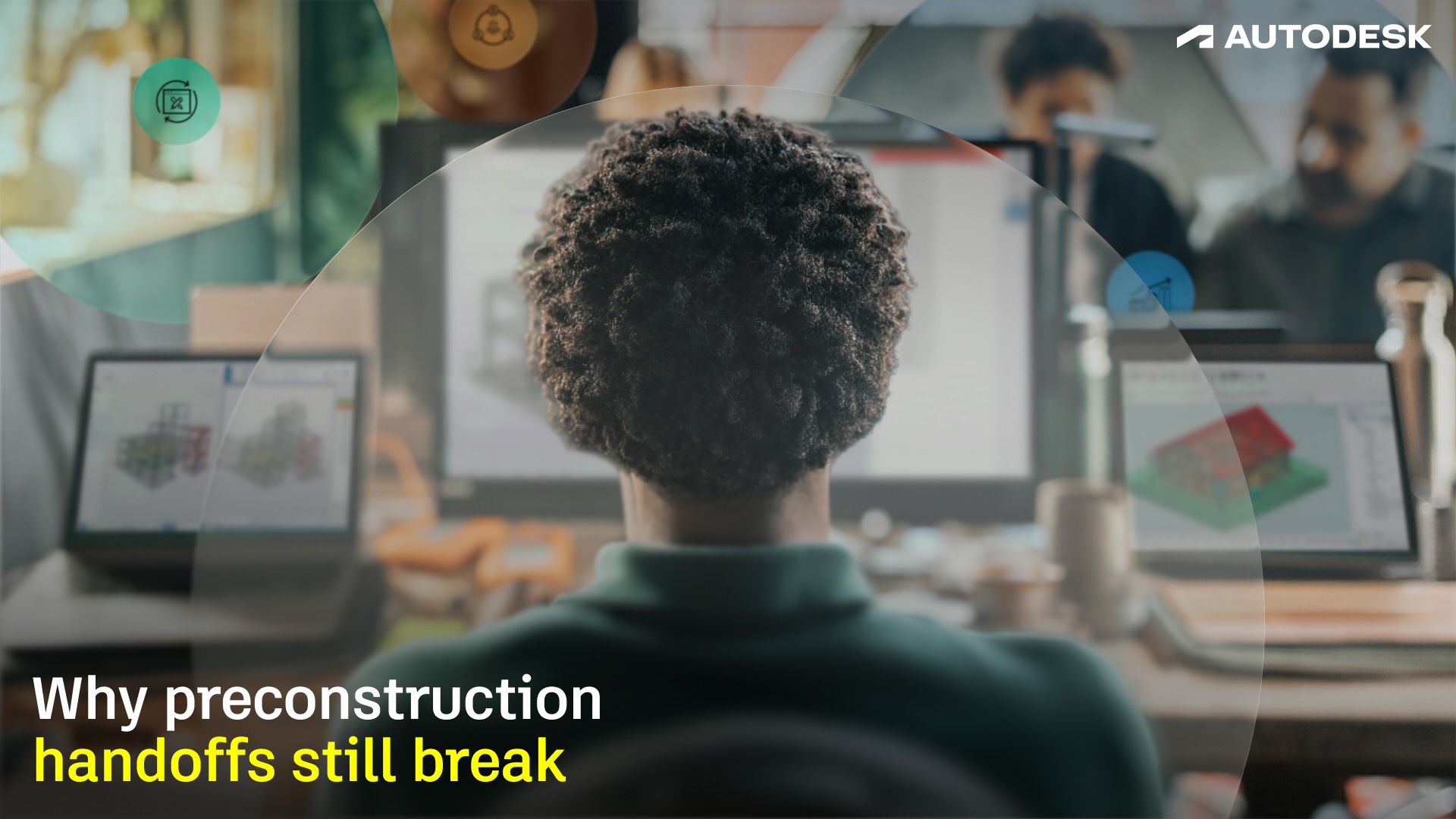
Now, each team typically performs well within its own scope and responsibilities. Despite this, projects still experience budget drift, late redesigns, and rushed value engineering. That’s not because people lack effort or expertise. It’s because the work is fragmented. When handoffs break down, the project stops functioning as a connected system.
In an ideal world, the project flow during preconstruction should be linear and connected. Design outputs should inform estimating decisions, then estimates would guide procurement and buyout strategy.
It sounds simple in theory, but the reality is more complicated.
Because information is often passed through static handoffs like PDFs, spreadsheets, or email markups, changes made in one phase often don’t reach downstream teams in time.
Each team is optimizing for its own goals, using its own tools, and working off its own version of the truth. Design is focused on intent. Estimating is working with what’s available at the time. Procurement is reacting to shifting costs and lead times.
The problem isn’t performance, it’s visibility. When folks don’t share real-time context, small decisions upstream can quietly create bigger issues downstream.
Misalignment during preconstruction opens up the project to multiple risks. Consider the following.
Preconstruction shapes the entire project, so any challenges, inefficiencies, and disconnects during this phase will inevitably have a downstream impact on later stages.
Budgets drift as early assumptions get tested in the real world. Teams are forced into late redesigns when something turns out to be harder to build or source than expected. Value engineering becomes reactive instead of strategic.
Fragmented preconstruction handoffs also create tension across teams. Trust takes a hit when surprises keep coming up, and instead of moving the project forward, teams spend more time putting out fires.
An integrated workflow keeps everyone working from the same source of truth, with decisions building on each other instead of getting lost between handoffs. It’s less about passing files and more about staying connected as the project evolves.
Here’s what that looks like day to day:
All of the above gives teams a more predictable, connected preconstruction process, with fewer things falling through the cracks.
Earlier, we talked about how things start to break down when preconstruction handoffs aren’t connected. But it works both ways. Here’s what happens on the flip side: when teams stay aligned, the whole project runs better from day one.
Breaking down silos starts with having the right mindset. It means treating preconstruction as a shared process rather than a series of handoffs. Part of doing this requires teams to make alignment of everyone's responsibility, not something that gets checked at the end.
That mindset matters, and once you’ve established that, it’s time to turn to the right toolset to support a more integrated way of working.
To accomplish that, teams need shared access to current data. Design, cost, and scope information should live in one place, so everyone is working from the same version of the truth. Solutions like Autodesk Forma for Preconstruction bring estimating, takeoffs, and bid management together, helping teams stay connected instead of juggling disconnected tools.
From there, workflows need to stay connected across phases. Instead of passing files from one team to the next, work should carry through from design to estimating to procurement without losing context. Early involvement from estimating and procurement becomes much easier when the system supports it.
Just as important, changes need to flow. When updates happen, they should flow across the project automatically, not get stuck in static files or outdated exports.
And finally, teams need clarity. Clear ownership still matters, but it should come with shared visibility so everyone understands how decisions impact the bigger picture. That’s what turns alignment from a goal into something teams can actually execute on.
Reducing risk and improving outcomes comes down to how well teams align early. Here are steps you can take to move in that direction.
Preconstruction is only getting more complex. Projects are moving faster, margins are tighter, and there’s less room for error.
When workflows stay disconnected, risk compounds quickly. But when design, estimating, and procurement are aligned from the start, teams can make better decisions, protect budgets, and keep projects on track.
If you’re looking to connect your workflows and reduce risk upfront, explore Autodesk Forma for Preconstruction and see how a more integrated approach can level up your precon game.