Autodesk Construction Cloud is now part of Autodesk Forma. Product names have been updated, though some resources may still reflect previous branding. Learn more.
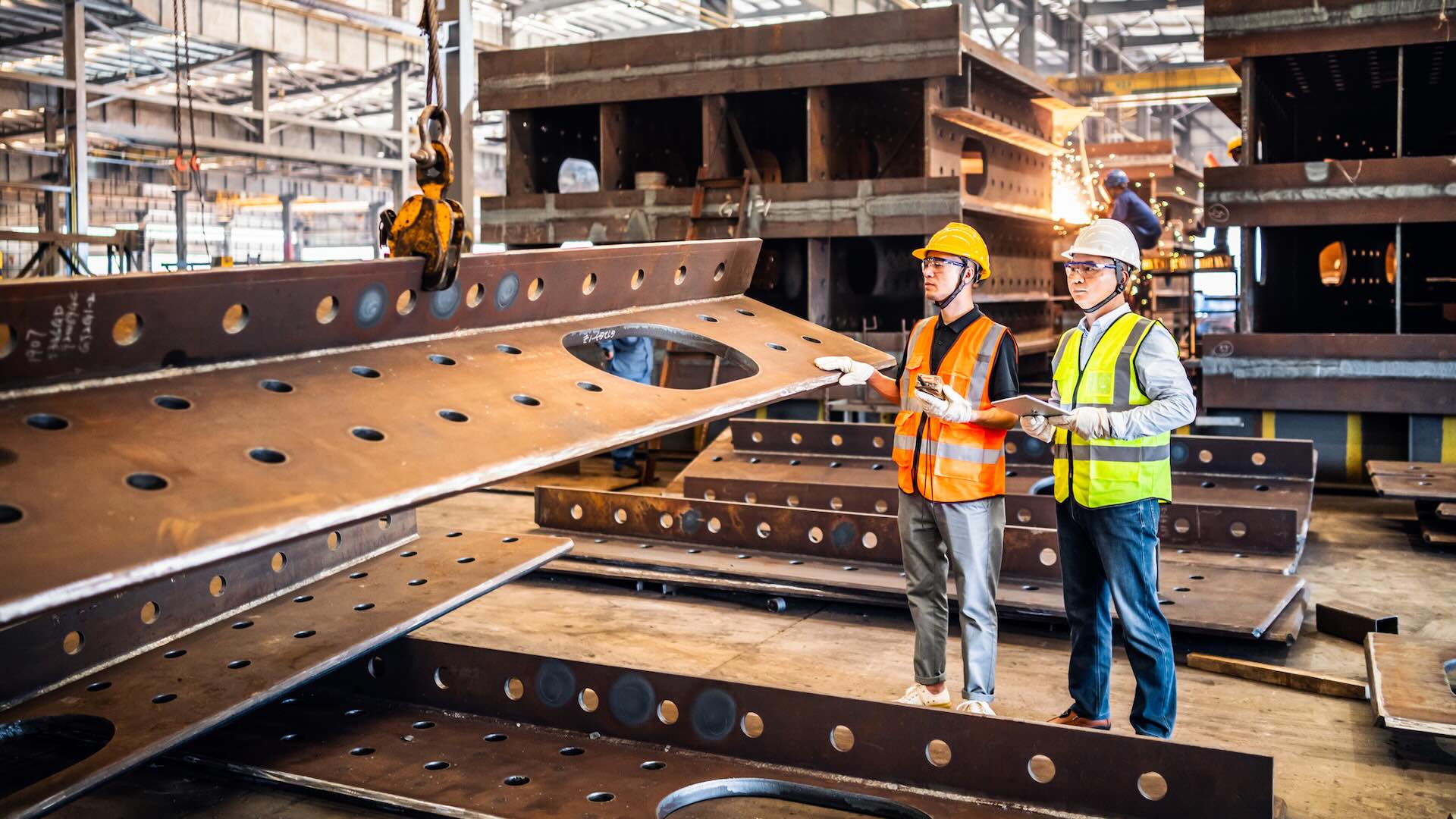
Manufacturing runs on precision and repeatable processes. Much like construction projects, capital projects that involve manufacturing can be incredibly complex, especially when they involve multiple phases and stakeholders.
Because project data moves, evolves, and changes hands so many times, it's all too easy for information to slip through the cracks.
A missed email here. An outdated document there. Without strong data ownership, risk and inefficiency compound.
This is why a solution like Autodesk Forma (formerly Autodesk Construction Cloud) is such a game-changer for manufacturing projects. Forma enables stakeholders to access information and collaborate on the same platform, so models, drawings, and turnover data stay connected from design through operations, and ultimately back to design when the project is expanded, or a line gets renovated. Unlike typical construction projects, manufacturing projects often follow a cyclical pattern—lines are upgraded, processes evolve, and facilities adapt—making continuous connectivity and data flow essential for long-term efficiency.
I recently sat down with several industry leaders for a webinar to discuss what data ownership looks like in the real world:
Check out the top takeaways from our conversation below.
Data is so much more than just files sitting on a server. In manufacturing projects, data serves as the blueprint for the entire asset lifecycle. Think about it: the decisions the team makes throughout a project stem from the data you have.
As Marisa points out, "Data captures all of your trade-offs, your lessons learned, and the real story of how your facility comes together. And when you own that blueprint, you don't have to depend on others to interpret what happened—you already have that clarity."
That's why owning and putting data to good use is one of the most powerful things you can do for your projects.
What's more, owning your data creates the continuity that manufacturing projects need to stay aligned from start to finish.
Marisa says it really well:
"Instead of resetting at each phase, the project gains momentum, your information is carried forward, your effort compounds, your risk decreases, your efficiency increases, and the asset just performs better over time."
Data ownership also "helps you minimize risk because you can trace and verify decisions, says Marisa.
She adds, "Risk builds quietly, and it does so in several ways." Consider the following:
"These are small moments, but they all have a direct cost, and they accumulate across the entire project and asset life cycle," adds Marisa.
As such, it's critical to stay in control of your data from day one.
Lesley from Starline Windows attests to this, saying that precision goes out the window (no pun intended) when your teams can't find or trust the information they need.
"Without a central source, we'd be dead in the water, and we'd be putting out windows left, right, and center at the wrong size, wrong shape. So the ownership of anything in terms of manufacturing must be somewhere."
Similarly, Josh saw firsthand how hard it was to manage a project when construction drawings, models, and equipment details lived in different places.
He says that at Domtar, "Data was everywhere before ACC. Now, it's all in one spot."
What does successful data ownership actually look like?
For Lesley, ACC promotes greater accountability by providing a clear paper trail of everything that arises during a project. This is especially useful when delays or questions are brought up.
Lesley shares several situations where ACC changed the conversation. In one case, their shop drawings were 14 weeks behind, and ACC helped her trace exactly why.
She could see when her team sent the drawings, when the customer replied, and how long the customer held the questions. "We followed up, and we followed up, and we followed up," she recalls. With ACC, she could show that 10 of those weeks weren't on Starline at all.
She also talks about a dispute in which a customer tried to charge them nearly a quarter of a million dollars for damages. Thanks to ACC, her team was able to pull almost 700 pages of inspection data to show what the windows looked like when they were signed off. "It just removes the emotion then because it's facts," she said. "Otherwise you're fighting a year down the road with just feelings, and that's never good."
Similarly, Josh shares that ACC helped save the company $500,000 by disputing incorrect change orders.
During his first project on ACC, a general contractor sent in $750,000 worth of change orders.
Josh dug in and used Sheets to compare all the IFB and IFC packages. "I was able to dispute over half of that," he says. The contractor had been looking at the wrong package, so he knocked the total down to around $250,000.
"That $500,000 was well over my pay grade for the year," he jokes. "I think I did a pretty good job with that. And I'm going to attribute that to Build."
Lesley and Josh also weigh in on the future of data ownership.
For Lesley, the future is all about doubling down on BIM and digital workflows.
"A lot of our industry is still, strangely enough, in the 2D world. I think the data is going to be required to go into the BIM world," she remarks.
Lesley sees everything shifting into BIM so teams can overlay models, run clash detection, and collaborate across disciplines. As she puts it, ACC becomes "the hub," the place where internal and external teams communicate and where all the data feeds into the systems the business relies on.
She expects ACC to drive more efficient project management, too, saying it should tell people "this is what your day should look like" instead of leaving teams to chase emails or personal to-do lists.
Looking ahead, she believes generative AI will help teams pull what they need from a shared data lake without hunting for files, making work faster and reducing errors.
Josh, for his part, looks forward to a future in which Domtar can set the standards and workflows for working with engineering firms.
"I've been using Build to leverage with the engineering firms and encourage them to use our standards and templates instead of working with their own system. That gives us visibility into the data. So, I hope that we, the customer, would be able to set the standard that the engineering firm would follow instead of the other way around."
Strong data ownership gives manufacturing teams more than organized files. It leads to better planning, fewer surprises, and more intelligent decisions at every stage of a project. When everyone works from the same source of truth, you reduce risk, move faster, and set your assets up for long-term performance.
Starline Windows and Domtar are just a couple examples of firms that are using ACC to own and manage their data.
With Autodesk Forma, these companies can run better projects and deliver better outcomes.
If you want to dig deeper into their stories and hear the full discussion, be sure to watch the full webinar.