As part of Autodesk’s annual Design & Make It Real program, the Make It Home affordable housing challenge invited students to reimagine how design and construction can strengthen communities through innovative, people-centered housing solutions. The challenge is one of several initiatives that help young people apply design thinking to real-world issues in the built environment—while gaining early exposure to the tools, mindsets, and careers shaping today’s architecture, engineering, and construction industry.
This year, we’re sharing these stories during Construction Inclusion Week and Careers in Construction Month, a time to celebrate the diverse voices and pathways shaping the future of building. Each feature in this series pairs a student designer with an industry mentor whose insights highlight how Design and Make skills and professional practice come together to create meaningful change.
Today’s story brings together Sharel Liu, Autodesk Design & Make Ambassador and architectural designer/technologist specializing in sustainability, simulation, and AI workflows, and Tejas Katikala, a student from Cox Mill High School in Concord, North Carolina.
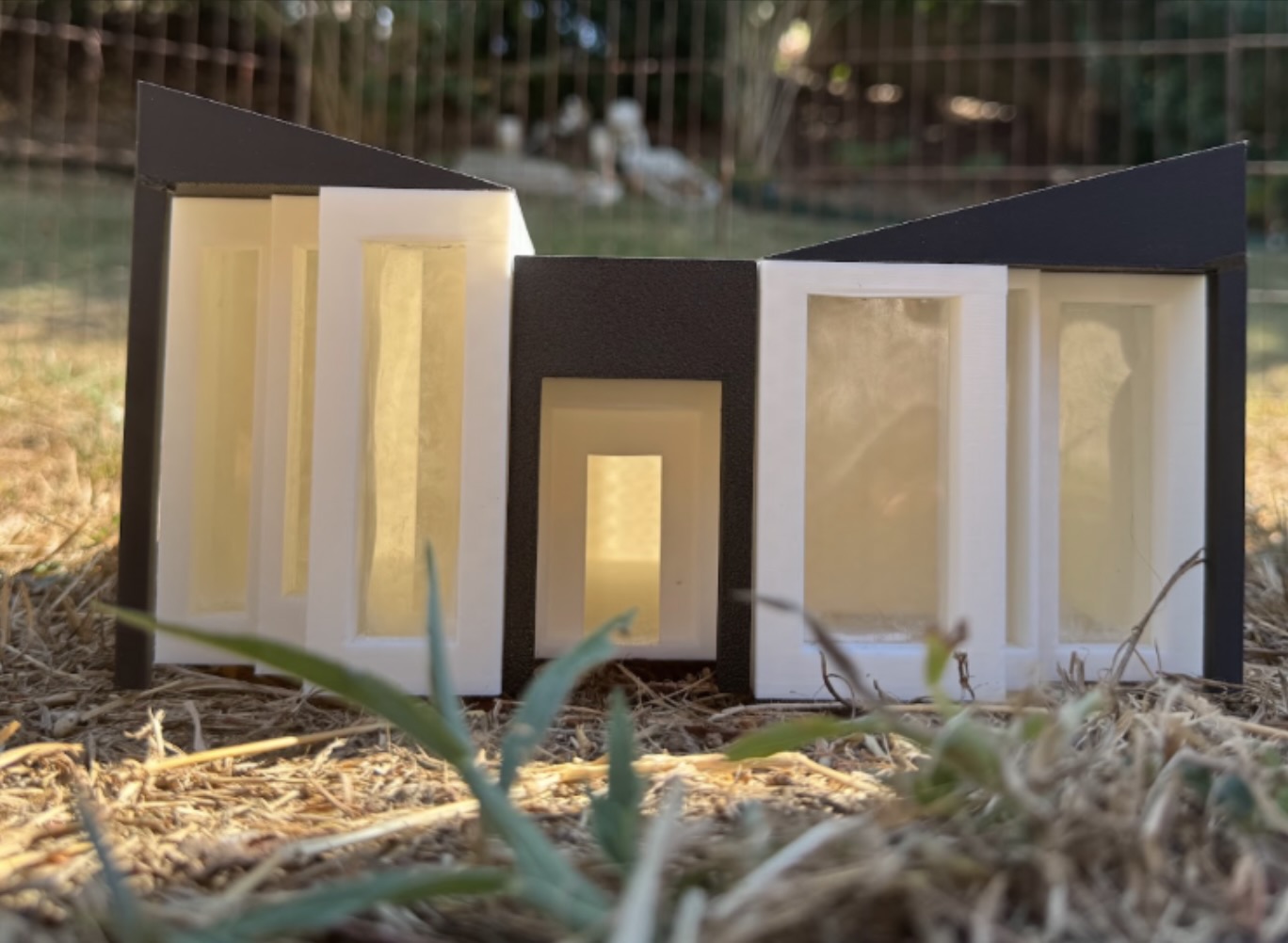
Tejas’s project, Modular Climate-Resilient Housing for Drought-Prone Regions, confronts the realities of climate change—extreme heat, drought, and rising utility costs—by designing affordable, off-grid modular housing that conserves water, generates energy, and adapts to future needs.
Modular Climate-Resilient Housing for Drought-Prone Regions responds to the intersecting crises of housing affordability, water scarcity, and extreme heat in places like Phoenix, Arizona. Recognizing how climate stress and rising utility costs drive families out of their homes, Tejas designed a modular housing system built for self-sufficiency, sustainability, and long-term resilience.
His solution features:
Using Autodesk Fusion and 3D printing, Tejas brought his design to life with technical precision and real-world testing—including a rainfall simulation that captured 75% of runoff.
As an architectural designer and technologist, Sharel Liu specializes in simulation, visualization, and AI-driven workflows in practice. She has implemented advanced tools in global design firms, presented at conferences on the future of digital design, and serves as an Autodesk Design & Make Ambassador.
Through the Autodesk Design & Make Ambassador Program—a student leadership community that connects college designers and engineers with industry professionals—Sharel mentors peers, hosts workshops, creates tutorials, and showcases real-world projects using Autodesk software. Ambassadors like Sharel develop leadership skills, gain exclusive access to industry leaders, and inspire future innovators.
Modular Climate-Resilient Housing for Drought-Prone Regions
Student Designer: Tejas Katikala
Project Site: Phoenix, Arizona
Tejas’s Modular Climate-Resilient Housing for Drought-Prone Regions tackles the pressing design problem of creating affordable, self-sufficient homes that can thrive in extreme heat and water scarcity.
He combines technical rigor and empathy to create modular, 3D-printed homes that capture water, generate power, and adapt to family growth. These design decisions, from butterfly roofs to photochromic windows reducing heat gain, directly engage with climate realities, cost constraints, and adaptability — combining concerns in housing solutions and with those of resilient living amid climate change.
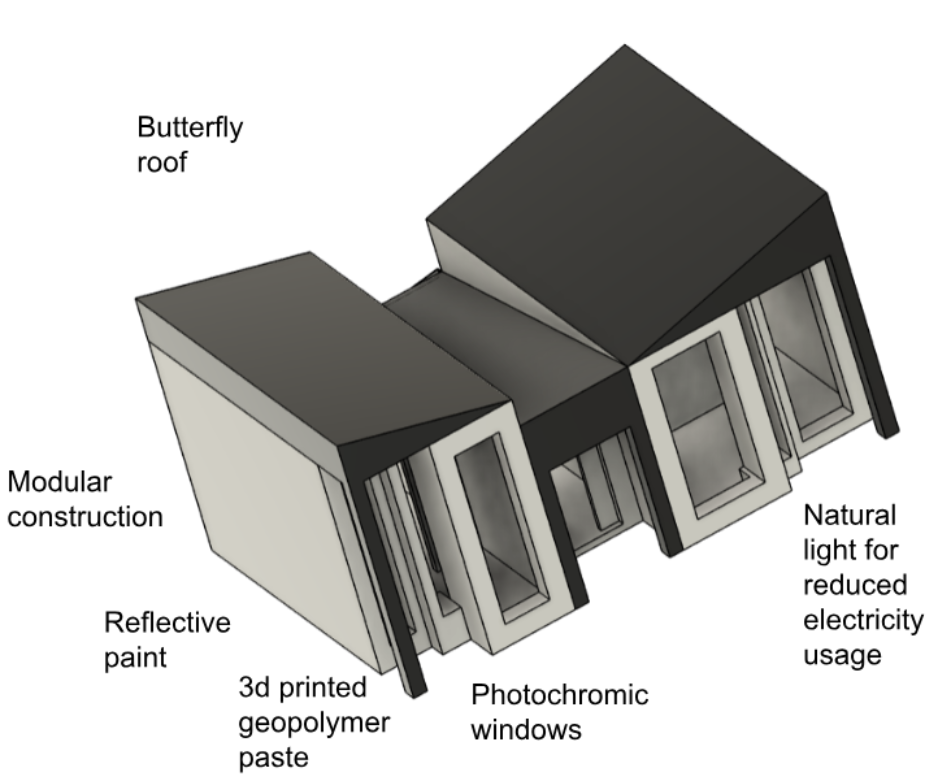
Using Autodesk Fusion, Tejas modeled every module and detail with precision, demonstrating a commendable level of technical sophistication. His work blends innovation, empathy, and material intelligence, showing that sustainability isn’t an add-on, but the foundation.
I was honored to be invited to judge this competition and saw it as a chance to engage with designers tackling urgent real-world problems. It’s exciting to see students approach complex challenges — such as, climate resilience, affordability, and energy efficiency — with creativity, technical skill, and empathy.
I was inspired by their ingenuity and resourcefulness, and by how they think systemically about design solutions that balance technical sophistication with people-centered thinking. Witnessing this mindset is energizing. They're not just designing buildings but imagining resilient communities for the future.
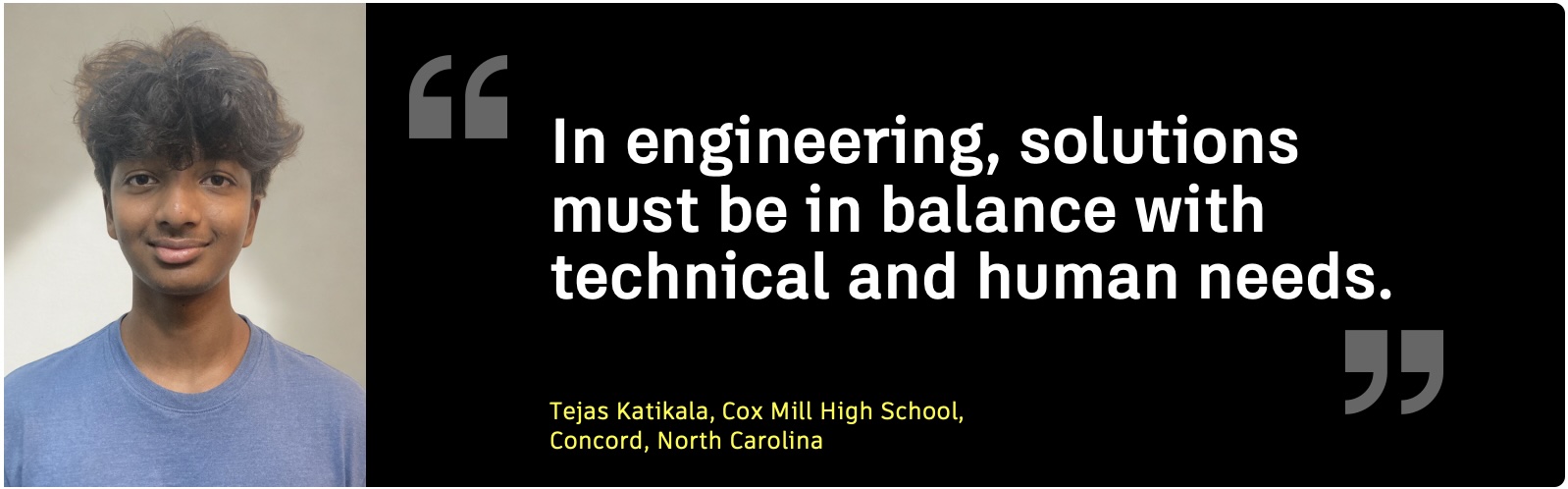
When he entered the Make It Home challenge, Tejas was a rising freshman at Cox Mill High School in Concord, North Carolina. Inspired by witnessing Arizona’s changing climate firsthand, he set out to design homes that don’t just survive extreme heat and drought, but help families thrive despite it.
From the time I was a kid, my family visited Arizona during the summers in order to see the Grand Canyon. Each year, the weather turned hotter, while the air turned drier. Feeling that change made me understand climate change is not something just happening, but something which was affecting everything.
Through this I came to understand that one of the most important issues of our day is climate change, and it requires practical effective solutions. In nearly every region of drought, people face not only water scarcity but also increasing housing costs. Furthermore, their current homes can't even withstand the increasing heat. That connection pushed me to seek alternatives for affordable, sustainable housing.
My project focuses on designing modular homes that help conserve water and adapt to changing climates. Rainwater collection and greywater reuse systems are added into the design to enhance sustainable life. It is built on the idea that allowing communities to rely less on external power and water systems can improve resilience and reduce their impact on the environment.
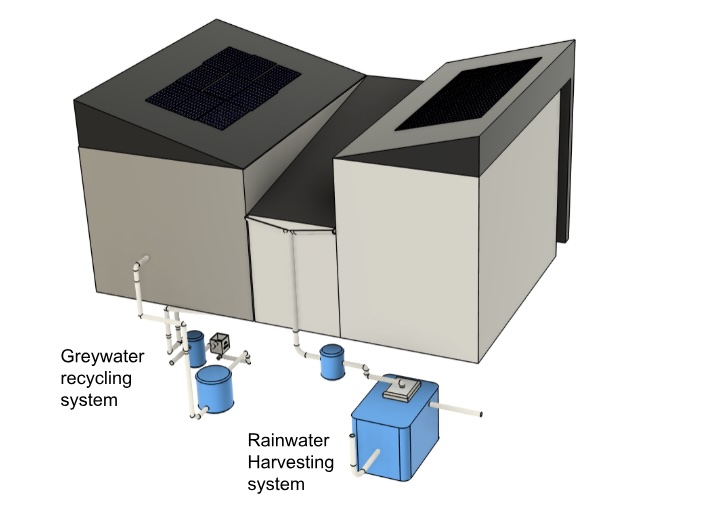
This project showed me that architects, engineers, and builders are not just creators of designs, but problem-solvers who can shape the ways communities address real world issues. Designing my project made me understand that their work is not just aesthetically pleasing or functional. Every choice, from materials to water systems to layout, has the potential to address important dilemmas like climate change, scarcity of resources, and the cost of housing. In engineering, solutions must be in balance with technical and human needs, and that innovation can have a direct impact on people's day-to-day lives. Architects, engineers, and builders can then turn simple ideas into tangible, concrete solutions.
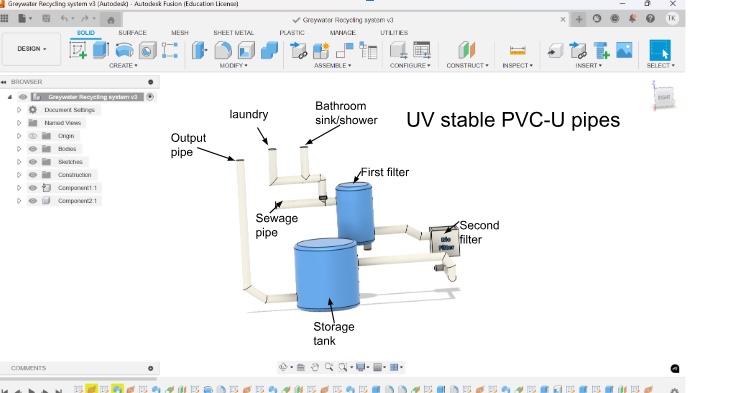
I wish I had known not to overthink every decision at the beginning. At first, I spent a lot of time worrying about making the perfect design or solution, which slowed down progress and made the process feel overwhelming. I learned that starting with an idea, and iterating as you go, allows creativity and practical solutions to emerge naturally. Sometimes taking action and learning along the way is more effective than trying to plan everything from the start.
During Construction Inclusion Week and Careers in Construction Month, we celebrate stories like these—where mentorship meets imagination, and where the next generation of designers and builders are not just imagining a more inclusive, resilient future, but actively engineering it.
Stay tuned for more Student + Mentor Spotlights from Autodesk’s Design & Make It Real program, featuring inspiring conversations between professionals and students who are redefining what it means to design and make a better world.