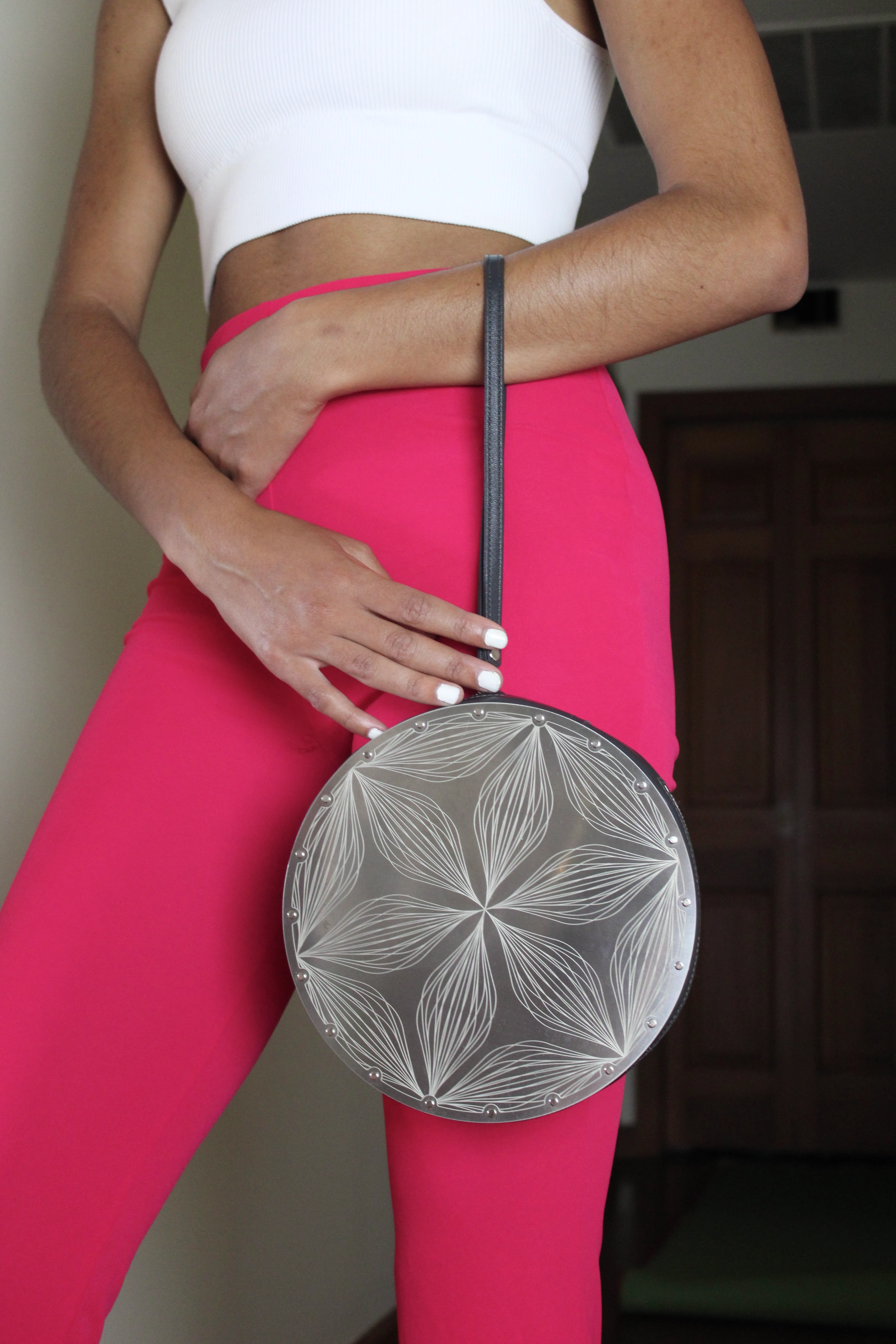
How Wendy Stevens redesigned the way she makes her handbags
After a fire destroyed decades of work, the acclaimed sheet-metal handbag designer went digital—freeing more time for what matters most: creating.

3 min read
Solopreneur Wendy Stevens has built an acclaimed career designing sheet-metal handbags by hand, with work featured in museums and Vogue.
Using Autodesk AutoCAD LT alongside hands-on fabrication, Stevens streamlined her work and expanded her portfolio to more than 170 designs.
Most handbags aren’t made from sheet metal. Wendy Stevens has spent more than 30 years proving they can be.
Living in New York City’s gritty East Village in the 1990s, surrounded by artists and working in a nightclub, Stevens found an unlikely inspiration: combine the neighborhood’s industrial character with high fashion sensibility by making handbags from sheet metal.
With no experience in metalworking, she taught herself the craft—acquiring equipment and even asking plumbers in her building for advice. Over time, Stevens refined her handmade bags into works of art, earning places in museum collections and the pages of Vogue.
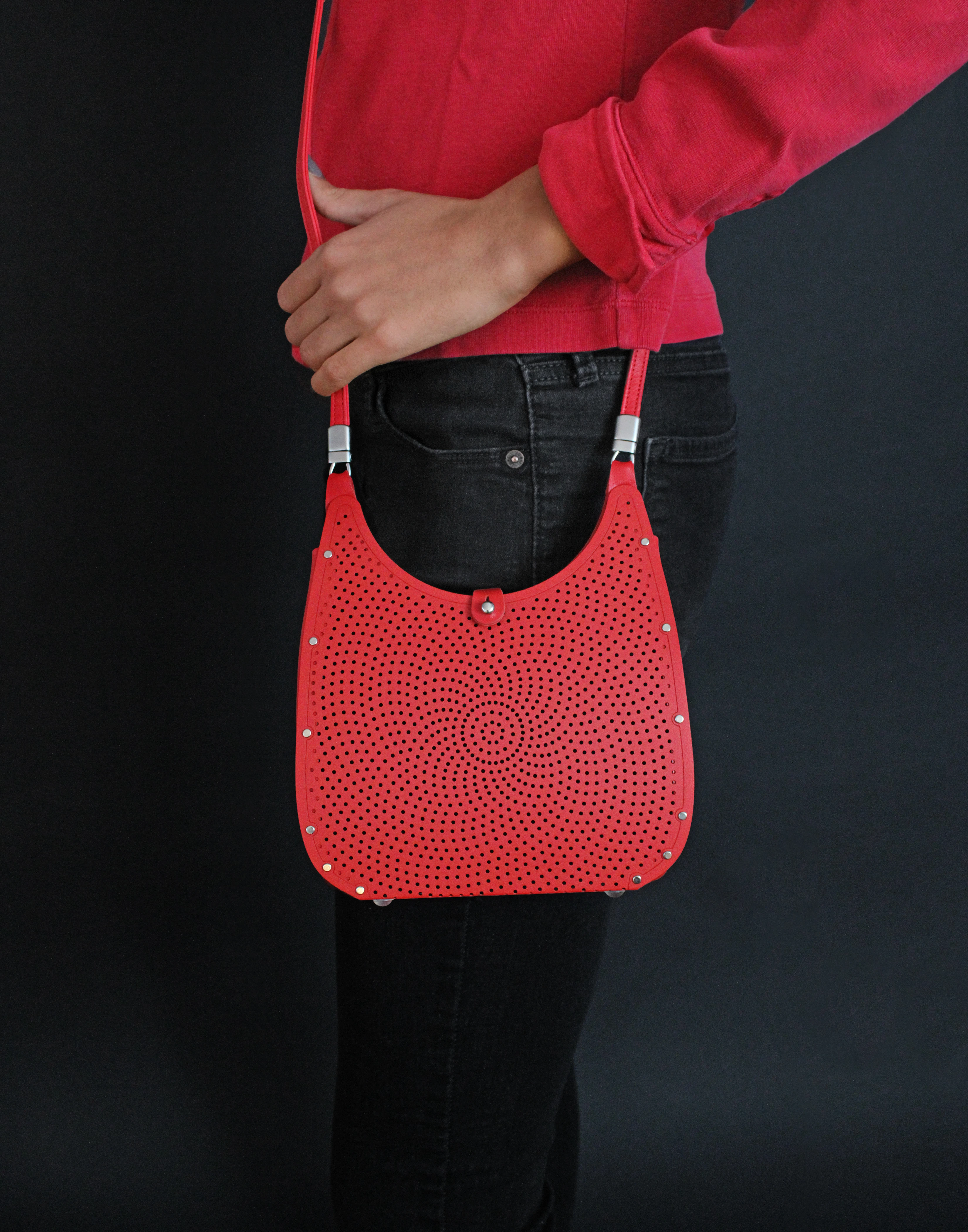
Years later, Stevens moved her business to a converted barn studio in rural Pennsylvania. She remained decidedly “low-tech”: her designs existed as physical metal templates, without digital drawings. Then a fire destroyed her entire workshop—and decades of work along with it.
As Stevens began rebuilding, the owner of a company that etches sheet metal gave her a reality check: if she wanted him to produce her highly particular designs, she would need to create the drawings herself.
Stevens had never used CAD in her work. But starting over gave her a reason to learn. She took an online AutoCAD LT course and found additional help at a local university. Within a year, she had gone from destroyed physical templates to completely digitized design resources—and an entirely new workflow.
Going digital didn’t mean leaving the handmade character of her work behind. Stevens still forms every bag herself using a press brake, slip rolls, a hand brake, and small hand tools. But Autodesk AutoCAD LT gives her creative and manufacturing options she simply didn’t have before.
“I was hand cutting the profiles of all these bags and then punching every single hole for rivets. I work in millimeters to get everything so precise,” Stevens says. “Before, the amount of time it took to punch every hole was immense. Now, once the design is created in AutoCAD LT and the photo tooling is made from the drawing, I can order the material from the etcher and receive the parts ready for fabrication. It is an incredibly efficient process.”
That efficiency gave Stevens something especially valuable: more time to design. Today, she has more than 170 handbag designs created using AutoCAD LT.
Wendy Stevens’ principle for designing and making
“Be willing to change the way you work without changing what makes the work yours.”
—Wendy Stevens, Designer
Share a principle for designing and making what matters most to you.
With her new digital workflow in place, Stevens has more freedom to decide what she wants to design and make. Selling primarily to consumers and exhibiting at shows nationwide, she can follow her own creative instincts rather than designing primarily for wholesalers.
That freedom has led her in new directions, from an intricately etched leopard-print tote to a monarch butterfly handbag that raises money for monarch conservation. Digital design has expanded what Stevens can explore without changing what makes her work distinctive: every finished bag still passes through her hands.
More than 30 years after she first began experimenting with sheet metal in the East Village—and after a fire forced her to rebuild decades of work—Stevens is still finding new things to make. What changed wasn’t the craft at the heart of her business, but the freedom she has to keep pushing it somewhere new.