State of Design & Make: Digital Transformation Pulse
Explore insights from 2,500 leaders on how digital transformation is shaping tomorrow’s industries—and why the future starts with bold action today.

3 min read
AI is no longer optional—it’s transformative, empowering leaders to streamline complexity, unlock new efficiencies, and reimagine what’s possible.
Digital maturity fuels industry reinvention, enabling bold leaders to adapt faster, cross-pollinate ideas, and set the pace for the future.
Download the full Pulse report for more insights.
Leaders in Design and Make industries are feeling generally positive about the future of their organizations, despite facing significant headwinds in the form of skills shortages, tech implementation struggles, and ongoing geo- and macro-economic headwinds. Results from the recent Autodesk Digital Transformation Pulse survey illustrate how digital transformation is not only helping organizations tackle these persistent challenges but is also opening doors to new opportunities.
Key findings from the State of Design & Make: Digital Transformation Pulse
1. 43% of early adopters are experiencing significant operational improvements from AI, showcasing AI’s capabilities in streamlining processes and enhancing productivity. These improvements are vital as industries strive for efficiency amidst growing project complexities and tighter deadlines
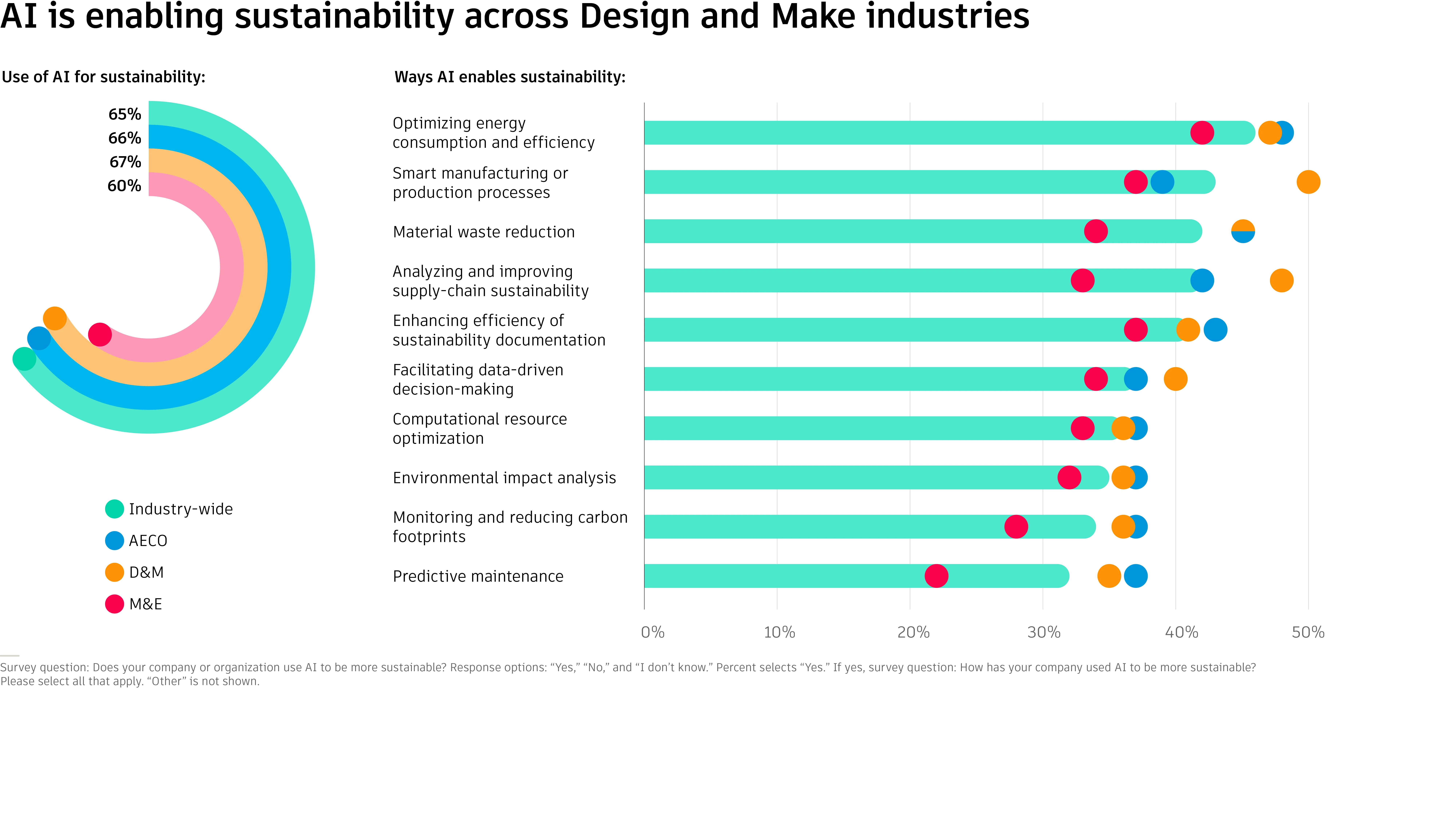
2. Addressing environmental concerns, 65% of organizations are incorporating AI to fortify their sustainability efforts. AI-driven solutions such as energy optimization and smart resource management are providing actionable insights, enabling companies to reduce their ecological footprint and comply with evolving regulations.
3. The demand for seamless collaboration between diverse teams and stakeholders has led to the rise of common data environments (CDEs), with two-thirds (65%) of professionals reporting that CDEs enhance trust and collaboration. This is critical in mitigating rework and ensuring project consistency across different phases.
4. 80% of digitally mature companies are adopting techniques and tools from other industries, demonstrating an innovative cross-sector approach. This adoption encourages a culture of continuous learning and adaptability, essential in an era where technological advancements are rapid and often disruptive.
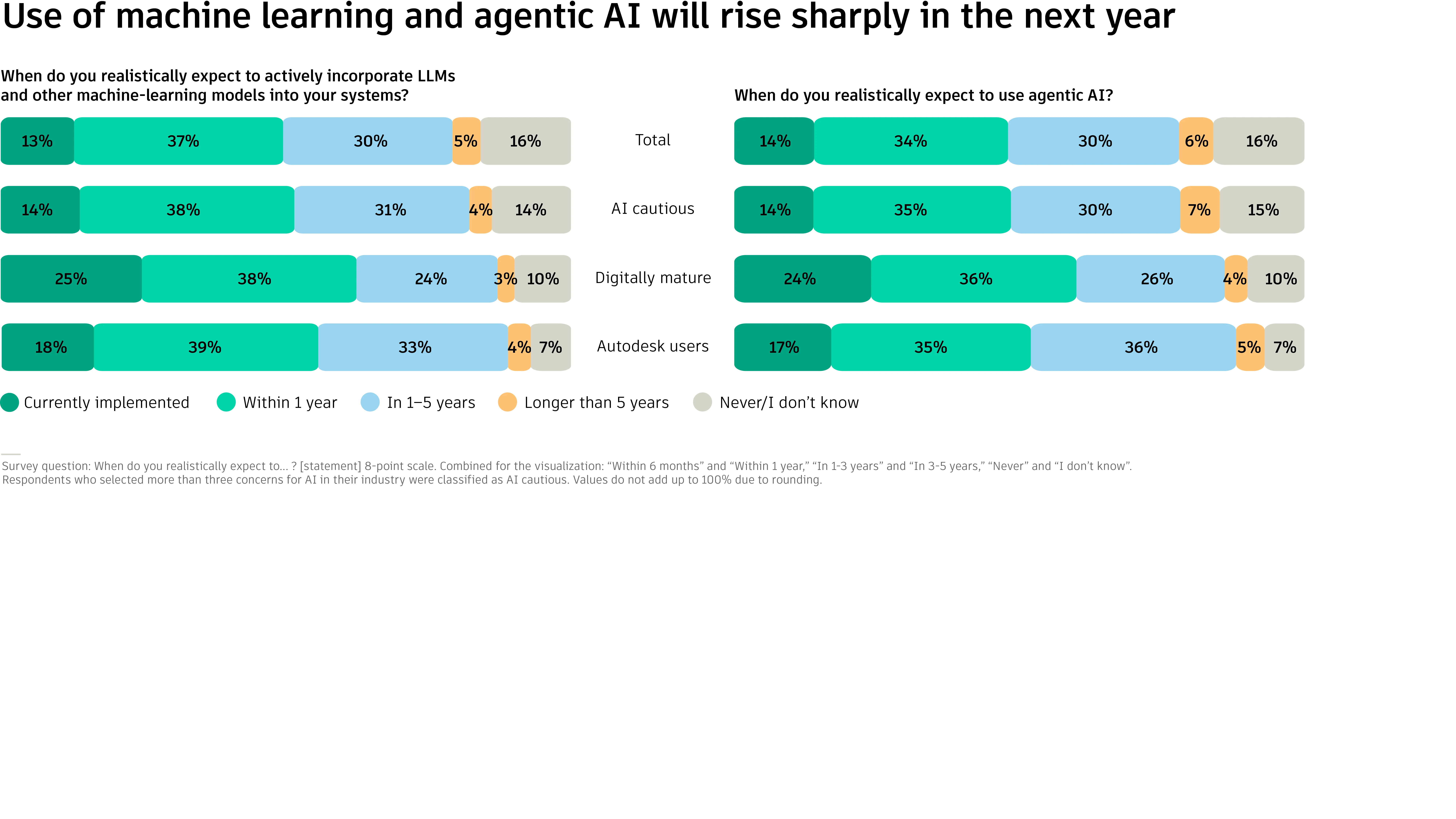
5. Leaders across Design and Make industries are starting to see the advantages of AI, and many organizations are anticipating huge leaps in progress over the next few years. While only 13% of organizations have currently incorporated machine-learning models, including Large Language Models, into their systems, 67% say they will include LLMs within the next five years.

A significant theme across industries is that AI has moved beyond a buzzword; it’s a catalyst with tangible effects. Leaders in Design and Make industries are not just witnessing change in their industries—they are active participants, leveraging technology to increase collaboration, streamline processes, and drive innovation. This rapid progress highlights how industries are evolving, underscoring the impact of digital transformation on building a better, more interconnected, world.
About the State of Design & Make: Digital Transformation Pulse
The data for the State of Design & Make: Digital Transformation Pulse was compiled from the Digital Transformation Pulse survey conducted between April 28 and May 28, 2025, with Statista Plus Research.
This survey includes responses from 2,500 global industry leaders and experts spanning various regions: Australia, Brazil, Canada, China, France, Germany, India, Italy, Japan, Mexico, the Middle East (Saudi Arabia & the United Arab Emirates), the Nordics (Denmark, Finland, Norway, Sweden), Spain, South Korea, the United Kingdom, and the United States. It draws insights from a wide range of industry professionals in architecture, engineering, construction, and operations (AECO); product design and manufacturing (D&M); and media and entertainment (M&E) from across sectors.
In this survey, “digitally mature” companies are defined as those that are approaching or have achieved the goal of their digital transformation journey. “Less digitally mature” companies are defined as those that are in the early stages or right in the middle of their digital transformation journey. An “Autodesk user” is a respondent whose company has used an Autodesk product within the past 12 months. AI “early adopters” are respondents who report AI awareness, training accessibility, and adoption encouragement from leaders and peers.

